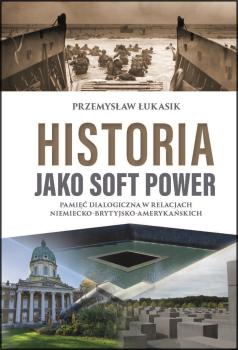
Historia jako soft power: Pamięć dialogiczna w relacjach niemiecko-brytyjsko-amerykańskich
Słowa kluczowe:
soft power, dialogic memory, collective memory, memory politics, transatlantic historical discourseStreszczenie
Czy historia może wpływać na stosunki między państwami?
Książka pokazuje, jak pamięć o przeszłości wpływa na relacje Niemiec, Wielkiej Brytanii i Stanów Zjednoczonych. Autor analizuje, jak państwa opowiadają o swojej historii i wykorzystują ją do budowania własnego wizerunku. Przygląda się muzeom, miejscom pamięci, rocznicom, przemówieniom oraz kulturze popularnej. Publikacja łączy koncepcję soft power z ideą pamięci dialogicznej. Pokazuje, że historia może dzielić, ale może też służyć dialogowi, pojednaniu i budowaniu współpracy. To książka o tym, jak przeszłość wpływa na dzisiejszą politykę i relacje między państwami.
Rozdziały
-
SPIS TREŚCI
-
I. WPROWADZENIE
-
1.1. Cel pracy .......... 7
-
1.2. Pytania i hipotezy badawcze .......... 9
-
1.3. Przegląd literatury .......... 11
-
1.4. Zakres czasowy i terytorialny .......... 17
-
II. METODOLOGIA
-
2.1. Podejście badawcze .......... 19
-
2.2.Metody analizy dyskursu .......... 19
-
2.3.Wybór źródeł .......... 20
-
2.4. Kryteria porównawcze .......... 21
-
III. RAMY TEORETYCZNE
-
3.1. Soft power i dyplomacja publiczna .......... 25
-
3.2. Pamięć zbiorowa i pamięć dialogiczna .......... 39
-
3.2. PAMIĘĆ ZBIOROWA I PAMIĘĆ DIALOGICZNA
-
4.1. Zarys kultury pamięci w Republice Federalnej Niemiec .......... 61
-
4.2. Instytucje pamięci .......... 68
-
4.3. Miejsca pamięci .......... 76
-
4.4. Perspektywa amerykańsko-anglosaska .......... 98
-
V. ANALIZA WYBRANYCH PRZYPADKÓW (CASE STUDY): WIELKA BRYTANIA
-
5.1. Zarys brytyjskiej polityki pamięci .......... 121
-
5.2. Instytucje pamięci .......... 128
-
5.3. Miejsca pamięci .......... 135
-
5.4. Perspektywa amerykańsko-niemiecka .......... 158
-
VI. ANALIZA WYBRANYCH PRZYPADKÓW (CASE STUDY): STANY ZJEDNOCZONE
-
6.1. Zarys amerykańskiej polityki pamięci .......... 173
-
6.2. Instytucje pamięci .......... 180
-
6.3. Miejsca pamięci .......... 192
-
6.4. Perspektywa angielska i niemiecka .......... 213
-
VII. ANALIZA PORÓWNAWCZA
-
7.1. Punkty wspólne i punkty rozbieżne .......... 235
-
7.2. Asymetrie i rezonanse pamięci .......... 242
-
7.3. Ocena skuteczności soft power w praktyce .......... 249
-
VIII. ZAKOŃCZENIE
-
8.1.Weryfikacja hipotez badawczych .......... 253
-
8.2. Wnioski ogólne .......... 265
-
IX. BIBLIOGRAFA
Downloads
Bibliografia
1. Monografie
Adams, Michael C. C. The Best War Ever: America and World War II. Baltimore: Johns Hopkins University Press, 1994.
Addison, Paul. Churchill: The Unexpected Hero. Oxford: Oxford University Press, 2005.
Alighieri, Dante.Monarchia. Tłum. i oprac. Władysław Seńko. Kęty: Antyk, 2002.
Allport, Alistair. Browned Off and BloodyMinded: The British Soldier Goes to War 1939–1945. New Haven: Yale University Press, 2015.
Ambrose, Stephen E. DDay: June 6, 1944 –The Climactic Battle of World War II. New York: Simon & Schuster, 1994.
Appy, Christian G. WorkingClass War: American Combat Soldiers andVietnam.ChapelHill: University of North Carolina Press, 1993.
Arendt, Hannah. Between Past and Future: Eight Exercises in Political Thought.New York: Penguin, 2006.
Arnold, Jörg. The Allied Air War and the Urban Memory: The Legacy of Strategic Bombing in Germany. Cambridge: Cambridge University Press, 2011.
Assmann, Aleida. Cultural Memory and Western Civilization: Functions, Media, Archives. Cambridge: Cambridge University Press, 2011.
Assmann, Aleida. Das neue Unbehagen an der Erinnerungskultur: Eine Intervention.München: C.H. Beck, 2010. Assmann, Aleida. Der lange Schatten der Vergangenheit: Erinnerungskultur und Geschichtspolitik. München: C.H. Beck, 2006.
Assmann, Aleida. Między historią a pamięcią. Antologia.Red. Magdalena Saryusz-Wolska. Warszawa: Wydawnictwo Uniwersytetu Warszawskiego, 2013. Assmann, Aleida. Shadows of Trauma: Memory and the Politics of Postwar Identity.New York: Fordham University Press, 2016.
Assmann, Aleida, i Linda Shortt, red. Memory and Political Change. New York: Palgrave Macmillan, 2012.
Assmann, Jan. Pamięć kulturowa. Pismo, zapamiętywanie i polityczna tożsamość cywilizacji starożytnych. Tłum. Anna Krzyczyńska-Pham. Warszawa: Wydawnictwo Uniwersytetu Warszawskiego, 2008.
Bachmann, Klaus, i Piotr Buras, red. Niemcy jako państwo cywilne. Wrocław: Oficyna Wydawnicza Atut – Wrocławskie Wydawnictwo Oświatowe, 2006.
Bailey, Thomas A. A Diplomatic History of the American People.New York: Appleton-Century-Crofts, 1969.
Bass, Gary J. Stay the Hand of Vengeance: The Politics of War Crimes Tribunals.Princeton: Princeton University Press, 2000.
Baylis, John. AngloAmerican Defence Relations 1939–84: The Special Relationship.London, Basingstoke: Macmillan, 1984.
Becher, Andrea, Eva Gläser i Nina Kallweit, red. Politische Bildung im Sachunterricht: Potenziale – Positionen – Perspektiven. Bad Heilbrunn: Verlag Julius Klinkhardt, 2024. https://www.pedocs. de/volltexte/2024/30407/pdf/Becher_et_al_2024_Politische_Bildung.pdf.
Beevor, Antony. Ardennes 1944: The Battle of the Bulge. London: Penguin Books, 2016.
Beevor, Antony. DDay. Bitwa o Normandię. Tłum. Magdalena Komorowska. Kraków: Znak Horyzont, 2010.
Berenbaum, Michael. The World Must Know: The History of the Holocaust as Told in the United States Holocaust Memorial Museum. Baltimore: Johns Hopkins University Press, 2006.
Biddiscombe, Perry. The Denazification of Germany: A History, 1945–1948. Stroud: The History Press, 2006.
Biddle, Tami Davis. Rhetoric and Reality in Air Warfare: The Evolution of British and American Ideas about Strategic Bombing, 1914–1945. Princeton: Princeton University Press, 2004.
Blight, David W. Race and Reunion: The Civil War in American Memory. Cambridge–London: Harvard University Press, 2001.
Bloxham, Donald. Genocide on Trial: War Crimes Trials and the Formation of Holocaust History and Memory. Oxford: Oxford University Press, 2001.
Bodnar, John. Remaking America: Public Memory, Commemoration, and Patriotism in the Twentieth Century. Princeton, NJ: Princeton University Press, 1992.
Borneman, John. Political Crime and the Memory of Loss. Bloomington: Indiana University Press, 2011.
Boulding, Kenneth E. Three Faces of Power. Newbury Park, CA: Sage Publications, 1989.
Braudel, Fernand. Historia i trwanie. Warszawa: Czytelnik, 1971.
Brokaw, Tom. The Greatest Generation. New York: Random House, 1998.
Burleigh, Michael. Trzecia Rzesza. Nowa historia.Tłum. Grzegorz Siwek. Kraków: Znak, 2010.
Buruma, Ian. The Churchill Complex: The Curse of Being Special, from Winston and FDR to Trump and Brexit. New York: Penguin Press, 2020.
Buruma, Ian. The Wages of Guilt: Memories of War in Germany and Japan.London: Atlantic Books, 2009.
Calder, Angus.The Myth of the Blitz. London: Pimlico, 1991.
Calderisi, Robin. Cecil Rhodes and Other Statues: Dealing Plainly with the Past. Columbus, Ohio: Gatekeeper Press, 2021.
Carr, Edward Hallett. Historia. Czym jest? Tłum. Piotr Kuś. Poznań: Zysk i S-ka, 1999.
Carr, Edward Hallett. Kryzys dwudziestolecia 1919–1939. Wprowadzenie do badań nad stosunkami międzynarodowymi. Tłum. Jan Sadkiewicz. Kraków: Universitas, 2021.
Cherney, Andrei. The Candy Bombers: The Untold Story of the Berlin Airlift and America’s Finest Hour. New York: Berkley Pub. Group, 2009.
Chwedoruk, Rafał. Polityka historyczna. Warszawa: Wydawnictwo PWN, 2018.
Cichocki, Marek A. Władza i pamięć. O politycznej funkcji historii.Kraków: Ośrodek Myśli Politycznej, 2005.
Clapson, Mark. The Blitz Companion: Aerial Warfare, Civilians and the City since 1911. London: University of Westminster Press, 2019.
Clausewitz, Carl von. O wojnie. Kraków: Mireki, 2007.
Commager, Henry S.The Empire of Reason. New York: Anchor Press/Doubleday, 1978.
Confino, Alon. Foundational Pasts: The Holocaust as Historical Understanding. New York: Cambridge University Press, 2011.
Connelly, Mark. We Can Take It! Britain and the Memory of the Second World War.Harlow– New York: Routledge, 2004.
Conrad, Sebastian. German Colonialism: A Short History.Cambridge: Cambridge University Press, 2011.
Crane, Conrad C. Bombs, Cities, and Civilians: American Airpower Strategy in World War II.Lawrence: University Press of Kansas, 1993.
Crawford, Keith A., i Stuart J. Foster. War, Nation, Memory: International Perspectives on World War II in School History Textbooks. Charlotte, NC: Information Age Publishing, 2007.
Cullen, Jim.Popular Culture in American History. Oxford: Wiley-Blackwell, 2007.
Day, Graham. Making Sense of Wales: A Sociological Perspective. Cardiff: University of Wales Press, 2002.
Dennis, Matthew. American Relics and the Politics of Public Memory. Amherst: University of Massachusetts Press, 2023.
Dobson, Alan P. The Politics of the AngloAmerican Economic Special Relationship, 1940–1987. New York: St. Martin’s Press, 1988.
Dockrill, Saki. Britain’s Policy for West German Rearmament, 1950–1955.Cambridge: Cambridge University Press, 2010.
Douglas, Lawrence. The Memory of Judgment: Making Law and History in the Trials of the Holocaust. New Haven: Yale University Press, 2001.
Dubiel, Helmut. Niemand ist frei von der Geschichte: Die nationalsozialistische Herrschaft in den Debatten des Deutschen Bundestages. München: Carl Hanser Verlag, 1999.
Dumbrell, James. A Special Relationship: AngloAmerican Relations from the Cold War to Iraq. Basingstoke: Palgrave Macmillan, 2006.
Edwards, Sam. Allies in Memory: World War II and the Politics of Transatlantic Commemoration, c. 1941–2001. Cambridge: Cambridge University Press, 2015.
Eriksen, Thomas H. Ethnicity and Nationalism: Anthropological Perspectives.London: Pluto Press, 1993.
Erll, Astrid. Kollektives Gedächtnis und Erinnerungskulturen Eine Einführung.Stuttgart:J.B. Metzler, 2017.
Erll, Astrid.Memory in Culture. Basingstoke–New York: Palgrave Macmillan, 2011.
Fairclough, Norman. Language and Power, 2nd ed. London: Routledge, 2001.
Fenby, Jonathan. Alianci. Stalin, Roosevelt, Churchill. Tajne rozgrywki zwycięzców drugiej wojny światowej. Kraków: Znak, 2007. Flint, John. Cecil Rhodes, Boston–Toronto: Little Brown and Company, 1974.
Florence, Eloise. Traces of Aerial Bombing in Berlin: Entangled Remembering. London–New York: Bloomsbury, 2024.
Frei, Norbert. Im Namen der Deutschen. Die Bundespräsidenten und die NSVergangenheit 1949– 1994. München: Beck, 2023.
Frei, Norbert. Polityka wobec przeszłości. Początek Republiki Federalnej i przeszłości nazistowskiej. Tłum. Barbara Ostrowska. Warszawa: Wydawnictwo Trio, 1999.
Friedrich, Jörg. The Fire: The Bombing of Germany 1940–1945. Tłum. Allison Brown. New York: Columbia University Press, 2008.
Fulbrook, Mary. German History since 1800. London: Arnold, 1997.
Fulbrook,Mary. The People’sState:East German Society from Hitler to Honecker.New Haven– London: Yale University Press, 2005.
Fulbrook, Mary. Reckonings: Legacies of Nazi Persecution and the Quest for Justice.New York: Oxford University Press, 2018.
Gallarotti, Giulio M. Cosmopolitan Power in International Relations: A Synthesis of Realism, Neoliberalism, and Constructivism. Cambridge: Cambridge University Press, 2010.
Gentile, Gian P. How Effective Is Strategic Bombing? Lessons Learned from World War II to Kosovo. New York–London: NYU Press, 2000.
Gilroy, Paul. Postcolonial Melancholia. New York: Columbia University Press, 2005.
Gopal, Priyamvada. Insurgent Empire: Anticolonial Resistance and British Dissent.London: Verso, 2019.
Gortat, Jakub. Niemiecka polityka pamięci wobec ofiar wojny powietrznej. Łódź: Wydawnictwo Uniwersytetu Łódzkiego, 2015.
Granieri, Ronald J. The Ambivalent Alliance: Konrad Adenauer, the CDU/CSU, and the West, 1949–1966. New York: Berghahn Books, 2003.
Grayling, Anthony Clifford. Among the DeadCities: Wasthe Allied Bombing of Civilians in WWII a Necessity or a Crime? London: Bloomsbury, 2006.
Grayzel, Susan R. At Home and under Fire: Air Raids and Culture in Britain from the Great War to the Blitz. Cambridge: Cambridge University Press, 2012.
Greenberg, Karen J. The Least Worst Place: Guantanamo’s First 100 Days.Oxford–New York: Oxford University Press, 2009.
Greenwood, Sean. Britain and the Cold War, 1945–1991. Basingstoke: St. Martin’s Press, 2000.
Greloff, Jakub. Pamięć jako kategoria polityczna w filozofii Paula Ricoeura. Warszawa: Instytut Pamięci Narodowej, 2021.
Hage, Volker. Zeugen der Zerstörung: Die Literaten und der Luftkrieg. Frankfurt am Main: S. Fischer Verlag, 2003.
Hagopian, Patrick. The Vietnam War in American Memory: Veterans, Memorials, and the Politics of Healing. Amherst: University of Massachusetts Press, 2009.
Halbwachs, Maurice. Społeczne ramy pamięci.Tłum. Marcin Król. Warszawa: Wydawnictwo Naukowe PWN, 1969.
Hall, Catherine. Civilising Subjects: Metropole and Colony in the English Imagination 1830–1867. Cambridge: Polity Press, 2002.
Hall, Stuart. Selected Writings: Essential Essays, vol. 1: Identity and Diaspora.Red. David Morley. Durham: Duke University Press, 2017.
Hartz, Louis.The Liberal Tradition in America. New York: Harcourt, Brace and World, 1955.
Hastings, Max. Bomber Command. London: Papermac, 1993.
Herf, Jeffrey. Divided Memory: The Nazi Past in the Two Germanys.Cambridge, MA: Harvard University Press, 1997.
Hesse, Klaus, Pamela Eve Selwyn i Stiftung Topographie des Terrors. Topographie des Terrors. Gestapo, SS und Reichssicherheitshauptamt in der Wilhelmund PrinzAlbrechtStraße –eine Dokumentation. Berlin: Stiftung Topographie des Terrors, 2010.
Heuser, Beatrice. NATO, Britain, France and the FRG: Nuclear Strategies and Forces for Europe, 1949–2000. New York: St. Martin’s Press, 1997.
Hicks, Dan. The Brutish Museums: The Benin Bronzes, Colonial Violence and Cultural Restitution. London: Pluto Press, 2020.
Hitchcock, William I. The Bitter Road to Freedom: A New History of the Liberation of Europe. New York: Free Press, 2008.
Hitchcock, William I. The Struggle for Europe: The Turbulent History of a Divided Continent, 1945–2002. New York: Anchor Books, 2004.
Holland, James. The Battle of Britain: Five Months That Changed History; May–October 1940. New York: St. Martin’s Press, 2010.
Jedlicki, Jerzy. Historia a świat wartości. Wybór esejów. Warszawa: Biblioteka Więzi, 2022.
Judt, Tony. Postwar: A History of Europe Since 1945. New York: Penguin Press, 2005.
Judt, Tony. Zapomniany wiek XX. Retrospekcje. Tłum. Paweł Marczewski. Poznań: Rebis, 2018.
Kaldor, Mary. New and Old Wars: Organized Violence in a Global Era, 3rd ed. Cambridge: Polity Press, 2012. Kaplan, Lawrence S. NATO Divided, NATO United: The Evolution of an Alliance.Westport– London: Praeger, 2004. Kaplan, Lawrence S. The United States and NATO: The Formative Years.Lexington: University Press of Kentucky, 1984. Kasianov, Georgiy. Memory Crash: Politics of History in and Around Ukraine, 1980s–2010s.Budapest–Vienna–New York: Central European University Press, 2021. Kennedy, Paul. Narodziny i upadek mocarstw. 500 lat burzliwej historii największych potęg świata. Tłum. Grzegorz Kuśnierz. Warszawa: Prześwity, 2025.
Keohane, Robert O., i Joseph S. Nye Jr. Power and Interdependence. Boston: Little Brown, 1977.
Klinkowitz, Jerome. Vonnegut in Fact: Fiction and the Real World. Columbia: University of South
Carolina Press, 1998. Koleva, Daniela. Memory Archipelago of the Communist Past: Public Narratives and Personal Recollections. Cham: Palgrave Macmillan, 2022. Koselleck, Reinhart. Futures Past: On the Semantics of Historical Time. Tłum. i wstęp Keith Tribe. New York: Columbia University Press, 2004. Kraushaar, Wolfgang. Die ProtestChronik 1949–1959: Eine illustrierte Geschichte von Bewegung, Widerstand und Utopie. Hamburg: Rogner & Bernhard, 1996. Krotz, Ulrich, i Joachim Schild. Shaping Europe: France, Germany, and Embedded Bilateralism from the Elysée Treaty to TwentyFirst Century Politics. Oxford: Oxford University Press, 2013. Kumar, Krishan. TheMaking of English National Identity.Cambridge:Cambridge University Press, 2003.
Kushner,Tony.Remembering Refugees: Then and Now.Manchester:ManchesterUniversityPress, 2006.
Lang, Anne, i Claus Leggewie. Der Kampf um die europäische Erinnerung: Ein Schlachtfeld wird besichtigt. München: C.H. Beck, 2011.
Le Goff, Jacques. Historia i pamięć.Tłum. Anna Gronowska i Joanna Stryjczyk. Warszawa: Wydawnictwo UW, 2007.
Levy, Daniel, i Natan Sznaider. The Holocaust and Memory in the Global Age.Philadelphia: Temple University Press, 2006.
Linenthal,EdwardT.SacredGround:AmericansandTheirBattlefields.Urbana:Universityof Illinois Press, 1993.
Lowenthal, David. The Past Is a Foreign Country.Cambridge: Cambridge University Press, 1985.
Lucas, Scott. Freedom’s War: The US Crusade Against the Soviet Union, 1945–56. Manchester: Manchester University Press, 1999.
Łuczewski, Michał. Kapitał moralny. Polityki historyczne w późnej nowoczesności.Kraków: Ośrodek Myśli Politycznej, 2017.
Łukasik, Przemysław. Antyamerykanizm w Niemczech.Kraków: Wydawnictwo Naukowe Uniwersytetu Pedagogicznego, 2018.
MacDonald, Charles B. A Time for Trumpets: The Untold Story of the Battle of the Bulge.New York: William Morrow, 1985.
Macdonald, Sharon. Difficult Heritage: Negotiating the Nazi Past in Nuremberg and Beyond. New York: Routledge, 2009.
MacGregor, Neil. Deutschland: Erinnerung einer Nation. München: C.H. Beck, 2015.
Machiavelli, Niccolo. Książę. Tłum. Antoni Sozański. Kraków: Wydawnictwo MG, 2017.
Marcuse, Harold. Legacies of Dachau: The Uses and Abuses of a Concentration Camp, 1933–2001. Cambridge: Cambridge University Press, 2001.
Margalit, Gilad. Guilt, Suffering, and Memory: Germany Remembers Its Dead of World War II. Bloomington: Indiana University Press, 2010.
Maylam, Paul. The Cult of Rhodes: Remembering an Imperialist in Africa. Claremont: David Philip, 2005.
McElya,Micki.ThePoliticsofMourning:DeathandHonorinArlingtonNationalCemetery.Cambridge, MA: Harvard University Press, 2016.
Miller, Roger G. To Save a City: The Berlin Airlift, 1948–1949.College Station: Texas A&M University Press, 2008.
Moeller, Robert G. War Stories: The Search for a Usable Past in the Federal Republic of Germany. Berkeley: University of California Press, 2001.
Morgenthau, Hans J. Polityka między narodami. Walka o potęgę i pokój. Tłum. Renata Włoch. Warszawa: Difin, 2010.
Mueller, Gordon. Preserving the Legacy: Creating The National WWII Museum.Baton Rouge: Louisiana State University Press, 2025.
Müller, Jan-Werner. Memory and Power in PostWar Europe: Studies in the Presence of the Past. Cambridge: Cambridge University Press, 2002.
Naim, Moisés. The End of Power: From Boardrooms to Battlefields and Churches to States, Why Being in Charge Isn’t What It Used to Be. New York: Basic Books, 2013.
Neitzel, Sönke. Deutsche Krieger: Vom Kaiserreich zur Berliner Republik – Eine Militärgeschichte. Berlin: Propyläen, 2020.
Nguyen, Viet Thanh. Nothing Ever Dies: Vietnam and the Memory of War. Cambridge: Harvard University Press, 2016.
Nijakowski, Lech M. Polska polityka pamięci. Esej socjologiczny. Warszawa: Wydawnictwo Akademickie i Profesjonalne, 2008.
Niven, Bill. Facing the Nazi Past: United Germany and the Legacy of the Third Reich.London: Routledge, 2002.
Noakes, Lucy. War and the British: Gender, Memory and National Identity.London: Bloomsbury Publishing, 2023.
Nora, Pierre. Między pamięcią i historią. Les lieux de mémoire, Tłum. Barbara Janicka. Warszawa: Wydawnictwo słowo/obraz terytoria, 2023.
Novick, Peter. The Holocaust in American Life. Boston: Houghton Mifflin, 1999.
Nye, Joseph S. Jr. Bound to Lead: The Changing Nature of American Power.New York: Basic Books, 1990.
Nye, Joseph S. Jr. The Future of Power. New York: Public Affairs, 2011.
Nye, Joseph S. Jr. Konflikty międzynarodowe. Wprowadzenie do teorii i historii. Warszawa: Wydawnictwo Akademickie i Profesjonalne, 2009.
Nye, Joseph S. Jr. Soft Power: The Means to Success in World Politics. New York: Public Affairs, 2004.
Nye, Joseph S. Jr. Understanding International Conflicts: An Introduction to Theory and History, 7th ed. New York: Pearson Longman, 2009.
Olick, Jeffrey K. The Politics of Regret: On Collective Memory and Historical Responsibility.New York: Routledge, 2007.
Ovendale, Ritchie. AngloAmerican Relations in the Twentieth Century: The Policy and Diplomacy of Friendly Superpowers. London: Red Globe Press, 1998.
Overy, Richard. The Bombing War: Europe 1939–1945. London: Allen Lane, 2013.
Parmar, Inderjeet. Think Tanks and Power in Foreign Policy: A Comparative Study of the Role and Influence of the Council on Foreign Relations and the Royal Institute of International Affairs, 1939–1945. New York: Palgrave Macmillan, 2004.
Plutarch z Cheronei. Żywoty sławnych mężów, t. VI. Wrocław: Ossolineum, 2004.
Potter, Simon J. Broadcasting Empire: The BBC and the British World, 1922–1970.Oxford: Oxford University Press, 2012.
Ralph, Jason. America’s War on Terror: The State of the 9/11 Exception from Bush to Obama.Oxford: Oxford University Press, 2013.
Reeves, Richard. Daring Young Men: The Heroism and Triumph of the Berlin Airlift, June 1948 – May 1949. New York: Simon & Schuster, 2010.
Reynolds, David. In Command of History: Churchill Fighting and Writing the Second World War. London, New York: Penguin, 2005.
Ricoeur, Paul. Memory, History, Forgetting.Tłum. Kathleen Blamey i David Pellauer. Chicago: The University of Chicago Press, 2004.
Roberts, Matthew. Memory and Modern British Politics: Commemoration, Tradition, Legacy. London: Bloomsbury Publishing, 2024.
Rosenfeld, Alvin H. The End of the Holocaust. Bloomington: Indiana University Press, 2013.
Rothbard, Murray. Education: Free and Compulsory. Auburn, AL: Ludwig von Mises Institute, 1999. Rothberg, Michael. Multidirectional Memory: Remembering the Holocaust in the Age of Decolonization. Stanford: Stanford University Press, 2009. Rydel, Jan. Polityka historyczna w Republice Federalnej Niemiec. Zaszłości, idee, praktyka. Kraków: Wydawnictwo Naukowe Uniwersytetu Pedagogicznego, 2011. Savage, Kirk. Monument Wars: Washington, D.C., the National Mall, and the Transformation of the Memorial Landscape. Berkeley: University of California Press, 2009. Schaeper, Thomas J., i Kathleen Schaeper. Rhodes Scholars, Oxford, and the Creation of an American Elite. New York: Berghahn Books, 2010.
Schroeder, Klaus. Der SEDStaat. Geschichte und Strukturen der DDR.Köln–Wien: Bohlau Verlag, 2013. Schwarz, Hans-Peter. Die Bundesrepublik Deutschland: Eine Bilanz nach 60 Jahren. Köln: Böhlau, 2008. Schwoch, James. Global TV: New Media and the Cold War, 1946–69.Urbana–Chicago: University of Illinois Press, 2009.
Sebald,WinfriedG.Wojnapowietrznailiteratura.Tłum.MałgorzataŁukasiewicz.Warszawa: Wydawnictwo W.A.B., 2012. Silverman, David. This Land Is Their Land: The Wampanoag Indians, Plymouth Colony, and the Troubled History of Thanksgiving. New York: Bloomsbury, 2020.
Simpson,David.9/11:TheCultureofCommemoration.Chicago:UniversityofChicagoPress,2006.
Sloan, Stanley R. Defense of the West: NATO, the European Union and the Transatlantic Bargain. Manchester: Manchester University Press, 2016. Smith, Helmut Walser. Germany: A Nation in Its Time: Before, during, and after Nationalism, 1500–2000. New York: Liveright, 2020.
Smith, Joseph. The Origins of NATO. Exeter: University of Exeter Press, 1990.
Snyder, Timothy, i Tony Judt. Rozważania o wieku XX.Tłum. Paweł Marczewski. Poznań: Rebis, 2013. Sontag, Susan.Regarding the Pain of Others. New York: Farrar, Straus and Giroux, 2003. Steege, Paul. Black Market, Cold War: Everyday Life in Berlin, 1946–1949.Cambridge: Cambridge
University Press, 2007. Stobiecki, Rafał. Pamięć i polityka historyczna. Doświadczenia Polski i jej sąsiadów.Warszawa: Instytut Pamięci Narodowej, Komisja Ścigania Zbrodni przeciwko Narodowi Polskiemu, 2008. Strittmatter, David. Memory, Heritage, and Preservation in 20thCentury England.Cham: Pal-grave Macmillan, 2023. Sturken, Marita. Tourists of History: Memory, Kitsch, and Consumerism from Oklahoma City to Ground Zero. London: Duke University Press, 2007. Süß, Dietmar. Tod aus der Luft: Kriegsgesellschaft und Luftkrieg in Deutschland und England. Bonn: Bundeszentrale für Politische Bildung, 2011.
Szacka, Barbara. Czas przeszły, pamięć i mit. Warszawa: Scholar, 2006.
Tate, Simon. A Special Relationship? British Foreign Policy in the Era of American Hegemony. Manchester: Manchester University Press, 2012.
Till, Karen E. The New Berlin: Memory, Politics, Place.Minneapolis: University of Minnesota Press, 2005.
Tocqueville, Alexis de. Democracy in America. Tłum. Harvey C. Mansfield i Delby Winthrop. Chicago–London: University of Chicago Press, 2002. Torrance, David. The Battle for Britain: Scotland and the Independence Referendum.London: Biteback Publishing, 2013. Toye, Richard. The Roar of the Lion: The Untold Story of Churchill’s World War II Speeches.Oxford: Oxford University Press, 2013. Trachtenberg, Marc. A Constructed Peace: The Making of the European Settlement, 1945–1963.
Princeton, NJ: Princeton University Press, 1999.
Tukidydes. Wojna peloponeska. Tłum. Kazimierz Kumaniecki. Warszawa: Czytelnik, 1988.
Tunnell, Michael O. Candy Bomber: The Story of the Berlin Airlift’s “Chocolate Pilot.” Watertown: Charlesbridge, 2010.
Van Engen, Abram. City on a Hill: A History of American Exceptionalism.New Haven: Yale University Press, 2020.
Viroli, Maurizio. Uśmiech Machiavellego. Biografia. Warszawa: Wydawnictwo W.A.B., 2006.
Vonnegut, Kurt.SlaughterhouseFive, or The Children’s Crusade: A DutyDance with Death.New York: Delacorte Press, 1969.
Wagnleitner, Reinhold. CocaColonization and the Cold War: The Cultural Mission of the United States in Austria after the Second World War.Chapel Hill–London: University of North Carolina Press, 1994.
Waltz, Kenneth N. Struktura teorii stosunków międzynarodowych.Tłum. Renata Włoch. Warszawa: Scholar, 2010.
Wandycz, Piotr. O czasach dawniejszych i bliższych. Studia z dziejów Polski i Europy Środkowo-Wschodniej. Poznań: Wydawnictwo Poznańskie, 2009.
Wasiutyński, Wojciech. Czwarte pokolenie. Szkice z dziejów nacjonalizmu polskiego.Londyn: Wydawnictwo Odnowa, 1982.
Wehler, Hans-Ulrich. Deutsche Gesellschaftsgeschichte, vol. 4. München: C.H. Beck, 2003.
Weinke, Annette. Die Nürnberger Prozesse. München: C.H. Beck, 2006.
Wellington, Jennifer. Exhibiting War: The Great War, Museums, and Memory in Britain, Canada, and Australia. Cambridge: Cambridge University Press, 2017.
Wendt, Alexander. Społeczna teoria stosunków międzynarodowych.Tłum. Włodzimierz Derczyński, Warszawa: Scholar, 2008.
Whiting, Charles. The Battle of the Bulge: Britain’s Untold Story. Stroud: Sutton Publishing, 1999.
Wiener, Jon. How We Forgot the Cold War: A Historical Journey Across America.Berkeley: University of California Press, 2012.
Wieviorka, Olivier. Normandy: The Landings to the Liberation of Paris.Tłum. Malcolm B. De-Bevoise, Cambridge: Belknap Press of Harvard University Press, 2008.
Winter, Jay. RememberingWar:TheGreat War between Memory and History in the Twentieth Century. New Haven: Yale University Press, 2006.
Winter, Jay. Sites of Memory, Sites of Mourning: The Great War in European Cultural History. Cambridge: Cambridge University Press, 1995.
Wodak, Ruth, i Michael Meyer. Methods of Critical Discourse Analysis. London: SAGE, 2009.
Wolff-Powęska, Anna. Pamięć. Brzemię i uwolnienie. Niemcy wobec nazistowskiej przeszłości 1945– 2010. Poznań: Zysk i S-ka, 2011.
Wolfrum, Edgar. Geschichtspolitik in der Bundesrepublik Deutschland: Der Weg zur bundesrepublikanischen Erinnerung. 1948–1990. Darmstadt: Wissenschaftliche Buchgesellschaft, 1999. Young, James E. The Stages of Memory: Reflections on Memorial Art, Loss, and the Spaces Between. Amherst: University of Massachusetts Press, 2016.
Zelizer, Barbie. Remembering to Forget: Holocaust Memory Through the Camera’s Eye.Chicago:
University of Chicago Press, 1998. Zinn, Howard. A People’s History of the United States. London–New York: Longman, 1996. Zinn, Howard. Politics of History. Urbana: University of Illinois Press, 1990.
2. Artykuły naukowe
Alsultany, Evelyn. “Arabs and Muslims in the Media after 9/11: Representational Strategies for a ‘Postrace’ Era.” American Quarterly 65, nr 1 (marzec 2013): 161–169.
Arad, Michael. “Reflecting Absence.” Places 21, nr 1 (2009): 66–71. https://placesjournal.org/assets/legacy/pdfs/reflecting-absence.pdf.
Arnold-Lourie, Christine. “Baby Pilgrims, Sturdy Forefathers, and One Hundred Percent Americanism: The Mayflower Tercentenary of 1920.” Massachusetts Historical Review17, nr 1 (2015): 35–66.
Assmann, Aleida. “Europe: A Community of Memory?” Bulletin of the German Historical Institute, nr 40 (wiosna 2007): 10–24.https://www.ghi-dc.org/publication/bulletin-spring-2007. Barnett, Michael, i Raymond Duvall. “Power in International Politics.” International Organization
59, nr 1 (2005): 39–75. Bush, Sargent. “America’s Origin Myth: Remembering Plymouth Rock.” American Literary Hi-story12, nr 4 (2000): 745–756. Chong, Alan. “Smart Power and Military Force: An Introduction.” Journal of Strategic Studies 38, nr 3 (2015): 233–244. Conboy, Martin. “A Tale of Two Battles: History in the Popular Press.” Media History13, nr 2–3 (2007): 257–271.
Cox, Sebastian. “An Effort of Biblical Proportions –The Berlin Airlift 1948–1949.” Air Power Review21, nr 2 (2020): 4–25. https://www.raf.mod.uk/what-we-do/centre-for-air-and-space-power-studies/aspr/apr-vol21-iss2-1-pdf/.
Crane, Susan A. “Choosing Not to Look: Representation, Repatriation, and Holocaust Atrocity Photography,” History and Theory47, nr 3 (2008): 309–330. Crane, Susan A. “Memory, Distortion, and History in the Museum.” History and Theory36, nr 4 (1997): 44–63. Cull, Nicholas. “Public Diplomacy: Seven Lessons for Its Future from Its Past.” Place Branding and Public Diplomacy6 (2010): 11–17. Daddow, Oliver J. “Euroscepticism and History Education in Britain.” Government and Opposition 41, nr 1 (2006): 64–85.
Dahl, Robert A. “The Concept of Power.” Behavioral Science 3, nr 2 (1957): 201–215.
Datta, Monti N. “The Decline of America’s Soft Power in the United Nations.” International Studies Perspectives10, nr 3 (2009): 265–284. Delaperrière, Maria. „Miejsca pamięci czy pamięć miejsc? Kilka refleksji na temat uobecniania prze-szłości w literaturze współczesnej,” Ruch Literacki54, nr 1 (2013): 49–61.
Doss, Erika. “War, Memory, and the Public Mediation of Affect: The National World War II Memorial and American Imperialism.” Memory Studies1, nr 2 (2008): 227–250.
Dragovic-Soso, Jasna. “Justice and Apology in the Aftermath of War and Mass Crime: Contemporary Serbia and the German Model.” History and Memory34, nr 1 (2022): 69–99.
Elcombe, Tim L. “Sport in Times of Turmoil: Political Uses of Sport in Global Crises.” Global Society36, nr 4 (2022): 538–561.
Fox, Jonathan, i Ariel Zellman. “With Friends Like These: Does American Soft Power Advance International Religious Freedom?”Religions 13,nr 6 (2022).https://doi.org/10.3390/ rel13060502.
Frank, Michael C. “At War with the Unknown: Hollywood, Homeland Security, and the Cultural Imaginary of Terrorism after 9/11.” Amerikastudien / American Studies60, nr 4 (2015): 485–504.
Fritzsche, Peter K. “NATO in History and Civics Textbooks: The West German Case.” Internationale Schulbuchforschung 12, nr 1 (1990): 35–47. Gallarotti, Giulio M. “The Changing? Face of Power in International Relations, 1979–2019.” Journal of Political Power 14, nr 1 (2021): 209–234. Gallarotti, Giulio M. “Soft Power: What It Is, Why It’s Important, and the Conditions for Its Effective Use.” Journal of Political Power 4, nr 1 (2011): 25–47. Geoff, Eley. “Finding the People’s War: Film, British Collective Memory, and World War II.” The American Historical Review106, nr 3 (2001): 818–838.
Goebel,Stefan.“RuinsofWarintoMemorialsofReconciliation:CoventryCathedralandthe Dresden Frauenkirche, 1940–2010.” Journal of British Studies 64 (2025): e14. https://doi. org/10.1017/jbr.2025.6.
Guttormsen, Torgrim Sneve. “Valuing Immigrant Memories as Common Heritage: The Leif Erik-son Monument in Boston.” History and Memory30, nr 2 (2018): 79–115.
Henrikson, Alan. “The Creation of the North Atlantic Alliance, 1948–1952.” Naval War College Review 33, nr 3 (1980): 4–39. http://www.jstor.org/stable/44642631.
Hulme, Tom. “The Mayflowerand‘Mother Plymouth’: Anglo-America, Civic Culture and the Urban Past.” Cultural and Social History18 nr 4 (2021): 517–537.
Kaldor, Mary. “Missing the Point on Hard and Soft Power?” The Political Quarterly85, nr 3 (lipiec–wrzesień 2014): 373–377.
Kansteiner, Wulf. “Finding Meaning in Memory: A Methodological Critique of Collective Me-mory Studies.”History and Theory41, nr 2 (2002): 179–197.
Kaute, Wojciech. “Synteza dziejów Polski Michała Bobrzyńskiego a synteza dziejów Polski Joachima Lelewela.” Człowiek w Kulturze 6–7 (1995): 363–385.
Kiwerska, Jadwiga. „Stany Zjednoczone w świecie zróżnicowanych potęg.” Przegląd Zachodni 68, nr 4 (2012): 27–55.
Lee, Seow Ting. “A Battle for Foreign Perceptions: Ukraine’s Country Image in the 2022 War with Russia.”Place Branding and Public Diplomacy19, nr 3 (2023): 345–358.
Linenthal, Edward T. “The Boundaries of Memory: The United States Holocaust Memorial Museum.”American Quarterly46, nr 3 (1994): 406–433.
Little, Stuart J. “The Freedom Train: Citizenship and Postwar Political Culture 1946–1949.” American Studies 34, nr 1 (1993): 35–67.
Lukes, Steven. “Power and the Battle for Hearts and Minds.” Millennium: Journal of International Studies 33, nr 3 (2005): 477–493.
Łukasik, Przemysław. „Między pamięcią a historią dialogiczną. Wojna powietrzna we współczesnym dyskursie niemiecko-angielskim.” Sensus Historiae41, nr 4 (2020): 119–137.
Mahlum, Lisa. “The Similarities and Difference: A Comparative Analysis of the New England Holocaust Memorial in Boston and the Memorial to the Murdered Jews of Europe in Berlin.” Intersections 10, nr 1 (2009): 279–308.
Malicki, Krzysztof. „Między kanonem a archiwum –o systematyzacji i klasyfikacji miejsc pamięci.” Kultura i Społeczeństwo64, nr 4 (2020): 97–114.
Marcuse, Harold. “Holocaust Memorials: The Emergence of a Genre.” The American Historical Review 115, nr 1 (2010): 53–89. https://doi.org/10.1086/ahr.115.1.53.
Mihăilescu, Dana. “Visualizing Transgenerational Memories of the Holocaust in Never Again Will I Visit Auschwitz: An Interview with Ari Richter.” MELUS50, nr 1 (wiosna 2025): 184–206. https://doi.org/10.1093/melus/mlaf013.
Nycz, Grzegorz. “The Bitburg Controversy from the New Cold War Perspective: Reagan’s Views on WWII Nazi Germany’s Soldiers’ Victimhood.” Ad Americam22 (2021): 33–43.
Nye, Joseph S. Jr. “Globalization’s Democratic Deficit: How to Make International Institutions More Accountable.” Foreign Affairs 80, nr 4 (lipiec/sierpień 2001): 2–6.
Nye, Joseph S. Jr. “Soft Power: The Origins and Political Progress of a Concept.” The Journal of International Communication 28, nr 1 (2022): 7–20.
Paliewicz, Nicholas S., i Hasian Marouf Jr. “Popular Memory at Ground Zero: A Heterotopology of National September 11 Memorial and Museum.” Popular Communication: The International Journal of Media and Culture15, nr 1 (2017): 30.
Pape, Elise. “Postcolonial Debates in Germany –An Overview.” African Sociological Review / Revue Africaine de Sociologie21, nr 2 (2017): 2–14.
Pennell, Catriona. “Learning Lessons from War? Inclusions and Exclusions in Teaching First World War History in English Secondary Schools.” History and Memory28, nr 1 (2016): 36–70. Plato, Alexander. „Erinnerungen an einSymbol:Zeitzeugen aus Dresden erinnern sich an den 13.Februar 1945.” BIOS–Zeitschrift für Biographieforschung, Oral History und Lebensverlaufsanalysen20, nr 1 (2007): 123–137. https://www.ssoar.info/ssoar/bitstream/handle/document/27050/ssoar-bioszeit-2007-1-plato-erinnerungen_an_ein_symbol.pdf?sequence=1&i sAllowed=y&lnkname=ssoar-bioszeit-2007-1-plato-erinnerungen_an_ein_symbol.pdf.
Rebisz, Bethany. “Reconstructing the Legacies of Colonial Detention: Digital Heritage, Memory, and the Mau Mau Emergency, 1952–1960.” Memory Studies18, nr 5 (2025): 1214–1232.
Reynolds, David. “A‘Special Relationship’? America, Britain and the International Order Since the Second World War.” International Affairs (Royal Institute of International Affairs 1944–)62, nr 1 (1985): 1–20.
Roth, Kenneth. “The Charade of US Ratification of International Human Rights Treaties.” Chicago Journal of International Law1, nr 2 (2000): 347–353.
Said, Edward W. “Invention, Memory, and Place.” Critical Inquiry26, nr 2 (zima 2000): 175–192.
Sargent, Mark L. “The Encounter on Cole’s Hill: Cyrus Dallin’s ‘Massasoit’ and ‘Bradford.’” Journal of American Studies27, nr 3 (1993): 399–408.
Short, Geoffrey. “Understanding and Teaching Holocaust Education.” Holocaust Studies23, nr 4 (maj 2017): 530–533.
Siebeck, Cornelia. „»Einzug ins verheißene Land«. Richard von Weizsäckers Rede zum 40. Jahrestag des Kriegsendes am 8. Mai 1985.” Zeithistorische Forschungen / Studies in Contemporary History12, nr 1 (2015): 161–169.
Solarz, Anna. „Antysemityzm jako instrument polityki zagranicznej Izraela.” Stosunki Międzynarodowe 49 (2014): 151–163.
Swigger, Jessica. “[Review of Plimoth Plantation].”The Public Historian31, nr 4 (2009): 132–135.
Till, Karen E. “Artistic and Activist Memory-Work: Approaching Place-Based Practice.” Memory Studies 1, nr 1 (2008): 99–113. https://doi.org/10.1177/1750698007083893. Titi, Catharine. “Museums and the Spoils of Empire: From the Benin Bronzes to Those Marbles Again.”Journal of Imperial and Commonwealth History53, nr 4 (2025): 979–987. Toll, Seymour. “Remembering the Battle of the Bulge.” The Sewanee Review122, nr 2 (2014): 270–282.
Tomlinson, Charlotte. “City of Culture, City of Transformation: Bringing Together the Urban Past and Urban Present in The Hull Blitz Trail.” Urban History48, nr 2 (2021): 351–363. Toye, Richard. “Winston Churchill’s ‘Crazy Broadcast’: Party, Nation, and the 1945 Gestapo Speech.”
Journal of British Studies 49, nr 3 (2010): 655–680. Trunkos, Judit. “Testing the Impact of Geopolitics on European Democratic Countries’ Soft Power Use.” Journal of Political Power 15, nr 3 (2022): 532–555. Vaninskaya, Anna. “‘My Mother, Drunk or Sober’: G. K. Chesterton and Patriotic Anti-Imperialism.”History of European Ideas34, nr 4 (2008): 535–547. Warburton, Theresa. “What Looks like a Grave: Native and Anarchist Place-Making in New England.”Studies in American Indian Literatures 32, nr 1 (2020): 75–110. Weiss, Jana. “The National Day of Mourning: Thanksgiving, Civil Religion, and American Indians.”Amerikastudien / American Studies63, nr 3 (2018): 367–388. Wendt, Alexander. “Anarchy Is What States Make of It: The Social Construction of Power Politics.”International Organization 46, nr 2 (1992): 391–425. Wintle, Claire. “Decolonising the Museum: The Case of the Imperial and Commonwealth Institutes.”Museum & Society 11, nr 2 (lipiec 2013): 185–201. Wolff-Powęska, Anna. „Polskie spory o historię i pamięć. Polityka historyczna.” Przegląd Zachodni 63, nr 1 (2007): 3–44. Wolff-Powęska, Anna. „Zwycięzcy i zwyciężeni. II wojna światowa w pamięci zbiorowej narodów.” Przegląd Zachodni 60 [61], nr 2 (2005): 3–40. Wright, Quincy. “The Law of the Nuremberg Trial.” The American Journal of International Law 41, nr 1 (1947): 38–72. Young, James E. “The Memorial’s Arc: Between Berlin’s Denkmal and New York City’s 9/11 Memorial.”Memory Studies9, nr 3 (2016): 325–331. Zins, Henryk. „Cecil J. Rhodes w opiniach historyków.” Annales Universitatis Mariae CurieSkłodowska.
Sectio F, Historia 50 (1995): 205–217. https://bazhum.muzhp.pl/media/ texts/none/1995-tom-50/annales_universitatis_mariae_curie_sklodowska_sectio_f_historia-r1995-t50-s205-217.pdf.
Zins, Henryk. “Joseph Conrad and the Early British Critics of Colonialism in the Congo.” Annales Universitatis Mariae CurieSkłodowska. Sectio F, Historia56 (2001): 41–54.
3. Rozdziały w pracach zbiorowych
Ankersmit, Frank. „Pamiętając Holokaust. Żałoba i melancholia.” (w:) Pamięć, etyka i historia. Angloamerykańska teoria historiografii lat dziewięćdziesiątych, red. Ewa Domańska (Poznań: Wydawnictwo Poznańskie, 2006), 163–184.
Assmann,Aleida.“DialogicMemory.”(w:)DialogueasaTransDisciplinaryConcept:Martin Buber’sPhilosophyofDialogueandItsContemporaryReception,red.PaulMendes-Flohr(Berlin– München–Boston: De Gruyter, 2015), 199–214.
Assmann, Aleida. „Ku europejskiej kulturze pamięci.” (w:) Aleida Assmann, Między historią a pamięcią. Antologia, red. Magdalena Saryusz-Wolska (Warszawa: Wydawnictwo Uniwersytetu Warszawskiego, 2013), 208–225.
Assmann, Aleida. „Podzielona pamięć Europy. Koncepcja pamięci dialogicznej.” (w:) Dialog kultur pamięci w regionie ULB, red. Alvydas Nikžentaitis i Michał Kopczyński (Warszawa: Muzeum Historii Polski, 2014), 13–22.
Baylis, John. “The Origins of NATO.” (w:) Routledge Handbook of NATO, red. John Andreas Olsen (London: Routledge, 2024), 15–28.
Brown, Raymond M. “The American Perspective on Nuremberg: A Case of Cascading Ironies. / Die amerikanische Sicht auf Nürnberg: Ein Fall wechselnder Ironien.” (w:) The Nuremberg Trials:InternationalCriminalLawSince1945:60thAnniversaryInternationalConference.Internationale Konferenz zum 60. Jahrestag, red. Herbert R. Reginbogin i Christoph Safferling (Berlin, Boston: De Gruyter Saur, 2006), 21–30.
Bushaway, Bob. “Name upon Name: The Great War and Remembrance.” (w:) Myths of the English, red. Roy Porter (Cambridge: Polity Press, 1992), 136–167. Chwedoruk, Rafał. “The Politics of History.” (w:) Polityka historyczna, red. Joanna Lubecka i Maciej Zakrzewski (Kraków: Ignatianum University Press, 2023), 25–31.
Dolski, Michael. “Introduction: D-Day in History and Memory.” (w:) DDay in History and Memory: The Normandy Landings in International Remembrance and Commemoration, red. Michael Dolski, Sam D. Edwards i John Buckley (Denton, TX: University of North Texas Press, 2014), 1–20.
Dolski, Michael. “‘Portal of Liberation’: D-Day Myth as American Self Affirmation.” (w:) DDay in History and Memory: The Normandy Landings in International Remembrance and Commemoration, red. Michael Dolski, Sam D. Edwards, i John Buckley (Denton, TX: University of North Texas Press, 2014), 43–85.
Fuchs, Anne. “World War II in German Cultural Memory: Dresden as Lieu de Mémoire.” (w:)The Routledge Handbook of German Politics & Culture, red. Sarah Colvin (London, New York: Routledge, 2015), 48–70.
Gumbrecht, Hans Ulrich. „Użyteczność historii.” (w:) Pamięć, etyka i historia. Angloamerykańska teoria historiografii lat dziewięćdziesiątych, red. Ewa Domańska (Poznań: Wydawnictwo Poznańskie, 2006), 117–127.
Greloff, Jakub. “Memory and Politics of Memory.” (w:) Polityka historyczna, red. Joanna Lubecka i Maciej Zakrzewski (Kraków: Ignatianum University Press, 2023), 51–77.
Helfer, Florian. “Colonial Violence in German and English History Textbooks.” (w:) Overcoming Conflict, red. Florian Helfer, Peter Geiss, Sylvia Müller-Tietz i Michael Rohrschneider (Wiesbaden: Springer VS, 2023), 147–180.
Hull, Isabel V. “Military Culture and the Production of ‘Final Solutions’ in the Colonies: The Example of Wilhelminian Germany.” (w:) The Specter of Genocide: Mass Murder in Historical Perspective, red. Robert Gellately i Ben Kiernan (Cambridge: Cambridge University Press, 2003), 141–162.
Iggers, Georg G. „Użycie i nadużycie historii. Odpowiedzialność historyka w historii i obecnie.” (w:) Pamięć, etyka i historia. Angloamerykańska teoria historiografii lat dziewięćdziesiątych, red. Ewa Domańska (Poznań: Wydawnictwo Poznańskie, 2006), 105–117.
Jefferson, Thomas. “Origins of Self Goverment.” (w:) The Complete Jefferson Writings, red. Saul K. Padover (New York: Duell, Sloan & Pearce, 1943), 293–298.
Layne, Christopher. “The Unbearable Lightness of Soft Power.” (w:) Soft Power and US Foreign Policy: Theoretical, Historical and Contemporary Perspectives, red. Inderjeet Parmar i Michael Cox (New York: Routledge, 2010), 51–82.
Li, Mingjiang. “Introduction: Soft Power –Nurture Not Nature.” (w:) Soft Power: China’s Emerging Strategy in International Politics, red. Mingjiang Li (New York: The Rowman & Little-field Publishing Group, 2009), 1–19.
Lubecka, Joanna, i Maciej Zakrzewski. „Cuius regio, eius historia?” (w:) Polityka historyczna, red.JoannaLubeckai MaciejZakrzewski(Kraków:IgnatianumUniversityPress,2023),11–29.
Markowska-Marczak, Barbara. “The Axiological Framework of the Politics of Memory.” (w:) Polityka historyczna, red. Joanna Lubecka i Maciej Zakrzewski (Kraków: Ignatianum University Press, 2023), 89–107.
Melissen, Jan. “The New Public Diplomacy: Between Theory and Practice.” (w:) The New Public Diplomacy: Soft Power in International Relations, red. Jan Melissen (Basingstoke: Palgrave Macmillan, 2005), 3–28.
Musiał, Filip. “The Politics of Memory and History.” (w:) Polityka historyczna, red. Joanna Lubecka i Maciej Zakrzewski (Kraków: Ignatianum University Press, 2023), 76–83.
Nye, Joseph S. Jr. “Notes for a Soft Power Research Agenda.” (w:) Power in World Politics, red. Felix Berenskoetter i Michael Williams (Abingdon: Routledge, 2007), 172–182.
Olick, Jeffrey K. “Willy Brandt in Warsaw: Event or Image? History or Memory?” (w:) Double Exposure: Memory and Photography, red. Olga Shevchenko (New Brunswick–London: Transaction Press, 2014), 21–40.
Palan, Ronen. “The Second British Empire and the Re-Emergence of Global Finance.” (w:) Legacies of Empire: Imperial Roots of the Contemporary Global Order, red. Sandra Halperin i Ronen Palan (Cambridge: Cambridge University Press, 2015), 46–68.
Rauer, Valentin. “Symbols in Action: Willy Brandt’s Kneefall at the Warsaw Memorial.” (w:) Social Performance, red. Jeffrey C. Alexander et al. (Cambridge: Cambridge University Press, 2006), 257–282.
Renner, Judith. “Poland–Germany: Balancing Competing Narratives through Apology.” (w:) Apology and Reconciliation in International Relations: The Importance of Being Sorry, red. Christopher Daase, Stefan Engert, Michel-André Horelt, Judith Renner i Renate Strassner (Abingdon: Routledge, 2016), 71–86.
Risse-Kappen, Thomas. “Collective Identity in a Democratic Community: The Case of NATO.” (w:)The Culture of National Security: Norms and Identity in World Politics, red. Peter J. Katzenstein (New York: Columbia University Press, 1996), 357–399.
Ruchniewicz, Krzysztof. „Polityka historyczna.” (w:) Historia w przestrzeni publicznej, red. Joanna Wojdon (Warszawa: PWN, 2018), 76–78.
Schofield, William. “Archaeologies of Air-Raid Shelters in Britain: Evidence of Social Space Under Bombardment.” (w:) Twentieth Century Archaeology, red. Victor Buchli (London: Routledge, 2001), 71–89.
Stempin, Arkadiusz. “The Politics of Memory as a Tool in International Relations.” (w:) Polityka historyczna, red. Joanna Lubecka i Maciej Zakrzewski (Kraków: Ignatianum University Press, 2023), 127–141.
Stobiecki, Robert. „Pamięć historyczna.” (w:) Historia w przestrzeni publicznej, red. Joanna Woj-don (Warszawa: PWN, 2018), 29–31. Zheng, Yongnian, i Chi Zhang. “‘Soft Power’ and Chinese Soft Power.” (w:) China’s Soft Power and International Relations, red. Hongyi Lai i Yiyi Lu (London: Routledge, 2012), 21–38.
4. Prace zbiorowe
Beiner, Guy, red. History, Memory, and Forgetting in Modern Ireland.Cambridge–New York: Cambridge University Press, 2001.
Bevernage, Berber, i Nico Wouters, red. The Palgrave Handbook of StateSponsored History After 1945. London: Palgrave Macmillan, 2018.
Bhambra, GurminderK., DaliaGebrial i Kerem Nişancıoğlu,red.Decolonising the University. London: Pluto Press, 2018.
Bird, Geoffrey, Sean Claxton i Keir Reeves, red. Managing and Interpreting DDay’s Sites of Me-mory: Guardians of Remembrance. London: Routledge, 2016.
Bosi, Lorenzo, i Gianluca De Fazio, red. The Troubles in Northern Ireland and Theories of Social Movements. Amsterdam: Amsterdam University Press, 2017.
Das, Santanu, red. Race, Empire and First World War Writing.New York: Cambridge University Press, 2011.
Dobson, Alan P., i Steve Marsh, red. Churchill and the AngloAmerican Special Relationship. Abingdon: Routledge, 2017.
Dolski, Michael, Sam. D. Edwards i John Buckley, red. DDay in History and Memory: The Normandy Landings in International Remembrance and Commemoration. Denton, TX: University of North Texas Press, 2014.
Domańska, Ewa, red. Pamięć, etyka i historia. Angloamerykańska teoria historiografii lat dziewięćdziesiątych. Poznań: Wydawnictwo Poznańskie, 2006.
Erll, Astrid, i Ansgar Nünning, red. A Companion to Cultural Memory Studies.Berlin: De Gruyter, 2010.
Fulbrook, Mary, i Martin Swales, red. Representing the German Nation: History and Identity in TwentiethCentury Germany. Manchester: Manchester University Press, 2000.
Gallarotti, Giulio M., i Mathilde Chatin, red. Emerging Powers in International Politics: The BRICS and Soft Power. London: Routledge 2018.
Gassert, Philipp, i Alan E. Steinweis, red. Coping with the Nazi Past: West German Debates on Nazism and Generational Conflict, 1955–1975. New York: Berghahn Books, 2006. Hall, Catherine, Keith McClelland i Jane Rendall, red. Defining the Victorian Nation: Class, Race, Gender and the British Reform Act of 1867. Cambridge: Cambridge University Press, 2000.
Hendershot, Robert M., i Steve Marsh, red. Culture Matters: AngloAmerican Relations and the AngloSphere. Manchester: Manchester University Press, 2020.
Horton, James Oliver, i Lois E. Horton, red. Slavery and Public History: The Tough Stuff of American Memory. New York: The New Press, 2006. Insall, Tony, i Patrick Salmon, red. The Brussels and North Atlantic Treaties, 1947–1949: Documents on British Policy Overseas, Series I, Volume X. London: Routledge, 2015.
Jordanova, Ludmilla, red. History in Practice,2nd, revised and expanded ed. London: Arnold, 2000.
Kennedy, David M., Lizabeth Cohen i Thomas A. Bailey, red. The American Pageant: A History of the American People, 17th ed. New York–Boston: Houghton Mifflin Harcourt, 2002. Kuźniar, Roman, red. Bezpieczeństwo międzynarodowe. Warszawa: Scholar, 2012.
Lubecka, Joanna, i Maciej Zakrzewski, red. Politics of Memory.Kraków: Ignatianum University
Press, 2023. Mälksoo, Maria, red. Handbook on the Politics of Memory.Cheltenham: Edward Elgar Publishing, 2023.
Meierhenrich, Jens, i Devin O. Pendas, red. Political Trials in Theory and History.Cambridge: Cambridge University Press, 2016.
Melissen, Jan, red. The New Public Diplomacy: Soft Power in International Relations.New York: Palgrave Macmillan, 2005.
Nachama, Andreas, et al., red. Topographie des Terrors: Gestapo, SS und Reichssicherheitshauptamt auf dem PrinzAlbrechtGelände –eine Dokumentation.Berlin: Stiftung Topographie des Terrors, 2010.
Niven,Bill,iChloePaver,red.Memorializationin Germanysince1945.Basingstoke:Palgrave Macmillan, 2010.
Pakier, Małgorzata, i Joanna Wawrzyniak, red. Memory and Change in Europe: Eastern Perspectives. New York: Berghahn Books, 2015.
Reynolds, David, red. The Origins of the Cold War in Europe: International Perspectives.New Haven: Yale University Press, 1994.
Schuessler, John M., Adam R. Seipp i Thomas D. Sullivan, red. The Berlin Airlift and the Making of the Cold War. College Station: Texas A&M University Press, 2022.
Sierpowski, Stanisław, red. Niemcy jako problem międzynarodowy po II wojnie światowej.Poznań: Instytut Historii Uniwersytetu im. Adama Mickiewicza, 2010.
Tilmans, Karin, Frank van Vree i Jay Winter, red. Performing the Past: Memory, History, and Identity in Modern Europe. Amsterdam: Amsterdam University Press, 2010.
Winks, Robin, i Roger Louis, red. The Oxford History of the British Empire. Volume V: Historiography. Oxford: Oxford University Press, 1999.