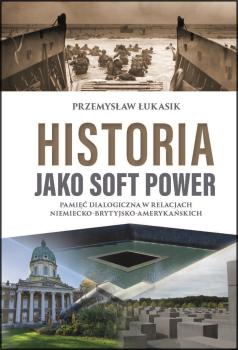
Historia jako soft power: Pamięć dialogiczna w relacjach niemiecko-brytyjsko-amerykańskich
Keywords:
soft power, dialogic memory, collective memory, memory politics, transatlantic historical discourseSynopsis
HISTORY AS SOFT POWER: DIALOGICAL MEMORY IN GERMAN-BRITISH-AMERICAN RELATION
The book is an interdisciplinary study that explores how history and collective memory can function as tools of soft power in international relations, with particular emphasis on German-British-American interactions. The author attempts to analyze Aleida Assmann’s concept of dialogical memory as a potential foundation for transatlantic cooperation in the realms of history, politics, and culture.
The study begins with the observation that the past constitutes not only a field of tensions and asymmetries but also an opportunity to build a shared, transnational historical narrative. The author focuses on the symbolic and communicative potential of history, examining how sites of memory, museum institutions, gestures of reconciliation, and official political statements collectively forge a transatlantic space of memory exchange. Among the hypotheses advanced, the central premise posits that dialogical memory can serve as an effective form of soft power by negotiating shared historical narratives and overcoming memory asymmetries (e.g., perpetrator/victim dichotomies). The risks of instrumentalizing the past, where history is used to legitimize current state actions (e.g., by omitting controversial aspects of the past) is also highlighted. In its theoretical section, the book discusses, among others, Joseph Nye’s concept of soft power, underlining its relevance in the context of new geopolitical threats, such as the war in Ukraine.
Soft power relies not on coercion, but on cultural attractiveness and moral authority. Museums, historical education, and cultural diplomacy are among its main expressions. Memory, when managed empathetically and dialogically, can support the international legitimacy of states. The book draws on a rich corpus of sources: political speeches, museum exhibitions, press articles, textbooks, and expert analyses. Through this lens, the author examines symbolic gestures (e.g., apologies by German presidents), institutions (e.g., the USHMM, Imperial War Museum), and international museum and anniversary projects. Using a constructivist approach grounded in the work of Alexander Wendt, he argues that historical memory shapes both national identities and inter-state relations, thereby becoming a resource of influence, legitimacy, and trust-building.
The author demonstrates that the memory narratives of Germany, the United Kingdom, and the United States – in the context of World War II and the Cold War – form a coherent, mutually complementary narrative. Reinforced by shared symbols, speeches, and memorial sites, this overarching narrative aligns with the framework of a strategic transatlantic partnership.
Chapters
-
TABLE OF CONTENTS
-
I. WPROWADZENIE
-
1.1. Cel pracy .......... 7
-
1.2. Pytania i hipotezy badawcze .......... 9
-
1.3. Przegląd literatury .......... 11
-
1.4. Zakres czasowy i terytorialny .......... 17
-
II. METODOLOGIA
-
2.1. Podejście badawcze .......... 19
-
2.2.Metody analizy dyskursu .......... 19
-
2.3.Wybór źródeł .......... 20
-
2.4. Kryteria porównawcze .......... 21
-
III. RAMY TEORETYCZNE
-
3.1. Soft power i dyplomacja publiczna .......... 25
-
3.2. Pamięć zbiorowa i pamięć dialogiczna .......... 39
-
3.2. PAMIĘĆ ZBIOROWA I PAMIĘĆ DIALOGICZNA
-
4.1. Zarys kultury pamięci w Republice Federalnej Niemiec .......... 61
-
4.2. Instytucje pamięci .......... 68
-
4.3. Miejsca pamięci .......... 76
-
4.4. Perspektywa amerykańsko-anglosaska .......... 98
-
V. ANALIZA WYBRANYCH PRZYPADKÓW (CASE STUDY): WIELKA BRYTANIA
-
5.1. Zarys brytyjskiej polityki pamięci .......... 121
-
5.2. Instytucje pamięci .......... 128
-
5.3. Miejsca pamięci .......... 135
-
5.4. Perspektywa amerykańsko-niemiecka .......... 158
-
VI. ANALIZA WYBRANYCH PRZYPADKÓW (CASE STUDY): STANY ZJEDNOCZONE
-
6.1. Zarys amerykańskiej polityki pamięci .......... 173
-
6.2. Instytucje pamięci .......... 180
-
6.3. Miejsca pamięci .......... 192
-
6.4. Perspektywa angielska i niemiecka .......... 213
-
VII. ANALIZA PORÓWNAWCZA
-
7.1. Punkty wspólne i punkty rozbieżne .......... 235
-
7.2. Asymetrie i rezonanse pamięci .......... 242
-
7.3. Ocena skuteczności soft power w praktyce .......... 249
-
VIII. ZAKOŃCZENIE
-
8.1.Weryfikacja hipotez badawczych .......... 253
-
8.2. Wnioski ogólne .......... 265
-
IX. BIBLIOGRAFA
Downloads
References
1. Monografie
Adams, Michael C. C. The Best War Ever: America and World War II. Baltimore: Johns Hopkins University Press, 1994.
Addison, Paul. Churchill: The Unexpected Hero. Oxford: Oxford University Press, 2005.
Alighieri, Dante.Monarchia. Tłum. i oprac. Władysław Seńko. Kęty: Antyk, 2002.
Allport, Alistair. Browned Off and BloodyMinded: The British Soldier Goes to War 1939–1945. New Haven: Yale University Press, 2015.
Ambrose, Stephen E. DDay: June 6, 1944 –The Climactic Battle of World War II. New York: Simon & Schuster, 1994.
Appy, Christian G. WorkingClass War: American Combat Soldiers andVietnam.ChapelHill: University of North Carolina Press, 1993.
Arendt, Hannah. Between Past and Future: Eight Exercises in Political Thought.New York: Penguin, 2006.
Arnold, Jörg. The Allied Air War and the Urban Memory: The Legacy of Strategic Bombing in Germany. Cambridge: Cambridge University Press, 2011.
Assmann, Aleida. Cultural Memory and Western Civilization: Functions, Media, Archives. Cambridge: Cambridge University Press, 2011.
Assmann, Aleida. Das neue Unbehagen an der Erinnerungskultur: Eine Intervention.München: C.H. Beck, 2010. Assmann, Aleida. Der lange Schatten der Vergangenheit: Erinnerungskultur und Geschichtspolitik. München: C.H. Beck, 2006.
Assmann, Aleida. Między historią a pamięcią. Antologia.Red. Magdalena Saryusz-Wolska. Warszawa: Wydawnictwo Uniwersytetu Warszawskiego, 2013. Assmann, Aleida. Shadows of Trauma: Memory and the Politics of Postwar Identity.New York: Fordham University Press, 2016.
Assmann, Aleida, i Linda Shortt, red. Memory and Political Change. New York: Palgrave Macmillan, 2012.
Assmann, Jan. Pamięć kulturowa. Pismo, zapamiętywanie i polityczna tożsamość cywilizacji starożytnych. Tłum. Anna Krzyczyńska-Pham. Warszawa: Wydawnictwo Uniwersytetu Warszawskiego, 2008.
Bachmann, Klaus, i Piotr Buras, red. Niemcy jako państwo cywilne. Wrocław: Oficyna Wydawnicza Atut – Wrocławskie Wydawnictwo Oświatowe, 2006.
Bailey, Thomas A. A Diplomatic History of the American People.New York: Appleton-Century-Crofts, 1969.
Bass, Gary J. Stay the Hand of Vengeance: The Politics of War Crimes Tribunals.Princeton: Princeton University Press, 2000.
Baylis, John. AngloAmerican Defence Relations 1939–84: The Special Relationship.London, Basingstoke: Macmillan, 1984.
Becher, Andrea, Eva Gläser i Nina Kallweit, red. Politische Bildung im Sachunterricht: Potenziale – Positionen – Perspektiven. Bad Heilbrunn: Verlag Julius Klinkhardt, 2024. https://www.pedocs. de/volltexte/2024/30407/pdf/Becher_et_al_2024_Politische_Bildung.pdf.
Beevor, Antony. Ardennes 1944: The Battle of the Bulge. London: Penguin Books, 2016.
Beevor, Antony. DDay. Bitwa o Normandię. Tłum. Magdalena Komorowska. Kraków: Znak Horyzont, 2010.
Berenbaum, Michael. The World Must Know: The History of the Holocaust as Told in the United States Holocaust Memorial Museum. Baltimore: Johns Hopkins University Press, 2006.
Biddiscombe, Perry. The Denazification of Germany: A History, 1945–1948. Stroud: The History Press, 2006.
Biddle, Tami Davis. Rhetoric and Reality in Air Warfare: The Evolution of British and American Ideas about Strategic Bombing, 1914–1945. Princeton: Princeton University Press, 2004.
Blight, David W. Race and Reunion: The Civil War in American Memory. Cambridge–London: Harvard University Press, 2001.
Bloxham, Donald. Genocide on Trial: War Crimes Trials and the Formation of Holocaust History and Memory. Oxford: Oxford University Press, 2001.
Bodnar, John. Remaking America: Public Memory, Commemoration, and Patriotism in the Twentieth Century. Princeton, NJ: Princeton University Press, 1992.
Borneman, John. Political Crime and the Memory of Loss. Bloomington: Indiana University Press, 2011.
Boulding, Kenneth E. Three Faces of Power. Newbury Park, CA: Sage Publications, 1989.
Braudel, Fernand. Historia i trwanie. Warszawa: Czytelnik, 1971.
Brokaw, Tom. The Greatest Generation. New York: Random House, 1998.
Burleigh, Michael. Trzecia Rzesza. Nowa historia.Tłum. Grzegorz Siwek. Kraków: Znak, 2010.
Buruma, Ian. The Churchill Complex: The Curse of Being Special, from Winston and FDR to Trump and Brexit. New York: Penguin Press, 2020.
Buruma, Ian. The Wages of Guilt: Memories of War in Germany and Japan.London: Atlantic Books, 2009.
Calder, Angus.The Myth of the Blitz. London: Pimlico, 1991.
Calderisi, Robin. Cecil Rhodes and Other Statues: Dealing Plainly with the Past. Columbus, Ohio: Gatekeeper Press, 2021.
Carr, Edward Hallett. Historia. Czym jest? Tłum. Piotr Kuś. Poznań: Zysk i S-ka, 1999.
Carr, Edward Hallett. Kryzys dwudziestolecia 1919–1939. Wprowadzenie do badań nad stosunkami międzynarodowymi. Tłum. Jan Sadkiewicz. Kraków: Universitas, 2021.
Cherney, Andrei. The Candy Bombers: The Untold Story of the Berlin Airlift and America’s Finest Hour. New York: Berkley Pub. Group, 2009.
Chwedoruk, Rafał. Polityka historyczna. Warszawa: Wydawnictwo PWN, 2018.
Cichocki, Marek A. Władza i pamięć. O politycznej funkcji historii.Kraków: Ośrodek Myśli Politycznej, 2005.
Clapson, Mark. The Blitz Companion: Aerial Warfare, Civilians and the City since 1911. London: University of Westminster Press, 2019.
Clausewitz, Carl von. O wojnie. Kraków: Mireki, 2007.
Commager, Henry S.The Empire of Reason. New York: Anchor Press/Doubleday, 1978.
Confino, Alon. Foundational Pasts: The Holocaust as Historical Understanding. New York: Cambridge University Press, 2011.
Connelly, Mark. We Can Take It! Britain and the Memory of the Second World War.Harlow– New York: Routledge, 2004.
Conrad, Sebastian. German Colonialism: A Short History.Cambridge: Cambridge University Press, 2011.
Crane, Conrad C. Bombs, Cities, and Civilians: American Airpower Strategy in World War II.Lawrence: University Press of Kansas, 1993.
Crawford, Keith A., i Stuart J. Foster. War, Nation, Memory: International Perspectives on World War II in School History Textbooks. Charlotte, NC: Information Age Publishing, 2007.
Cullen, Jim.Popular Culture in American History. Oxford: Wiley-Blackwell, 2007.
Day, Graham. Making Sense of Wales: A Sociological Perspective. Cardiff: University of Wales Press, 2002.
Dennis, Matthew. American Relics and the Politics of Public Memory. Amherst: University of Massachusetts Press, 2023.
Dobson, Alan P. The Politics of the AngloAmerican Economic Special Relationship, 1940–1987. New York: St. Martin’s Press, 1988.
Dockrill, Saki. Britain’s Policy for West German Rearmament, 1950–1955.Cambridge: Cambridge University Press, 2010.
Douglas, Lawrence. The Memory of Judgment: Making Law and History in the Trials of the Holocaust. New Haven: Yale University Press, 2001.
Dubiel, Helmut. Niemand ist frei von der Geschichte: Die nationalsozialistische Herrschaft in den Debatten des Deutschen Bundestages. München: Carl Hanser Verlag, 1999.
Dumbrell, James. A Special Relationship: AngloAmerican Relations from the Cold War to Iraq. Basingstoke: Palgrave Macmillan, 2006.
Edwards, Sam. Allies in Memory: World War II and the Politics of Transatlantic Commemoration, c. 1941–2001. Cambridge: Cambridge University Press, 2015.
Eriksen, Thomas H. Ethnicity and Nationalism: Anthropological Perspectives.London: Pluto Press, 1993.
Erll, Astrid. Kollektives Gedächtnis und Erinnerungskulturen Eine Einführung.Stuttgart:J.B. Metzler, 2017.
Erll, Astrid.Memory in Culture. Basingstoke–New York: Palgrave Macmillan, 2011.
Fairclough, Norman. Language and Power, 2nd ed. London: Routledge, 2001.
Fenby, Jonathan. Alianci. Stalin, Roosevelt, Churchill. Tajne rozgrywki zwycięzców drugiej wojny światowej. Kraków: Znak, 2007. Flint, John. Cecil Rhodes, Boston–Toronto: Little Brown and Company, 1974.
Florence, Eloise. Traces of Aerial Bombing in Berlin: Entangled Remembering. London–New York: Bloomsbury, 2024.
Frei, Norbert. Im Namen der Deutschen. Die Bundespräsidenten und die NSVergangenheit 1949– 1994. München: Beck, 2023.
Frei, Norbert. Polityka wobec przeszłości. Początek Republiki Federalnej i przeszłości nazistowskiej. Tłum. Barbara Ostrowska. Warszawa: Wydawnictwo Trio, 1999.
Friedrich, Jörg. The Fire: The Bombing of Germany 1940–1945. Tłum. Allison Brown. New York: Columbia University Press, 2008.
Fulbrook, Mary. German History since 1800. London: Arnold, 1997.
Fulbrook,Mary. The People’sState:East German Society from Hitler to Honecker.New Haven– London: Yale University Press, 2005.
Fulbrook, Mary. Reckonings: Legacies of Nazi Persecution and the Quest for Justice.New York: Oxford University Press, 2018.
Gallarotti, Giulio M. Cosmopolitan Power in International Relations: A Synthesis of Realism, Neoliberalism, and Constructivism. Cambridge: Cambridge University Press, 2010.
Gentile, Gian P. How Effective Is Strategic Bombing? Lessons Learned from World War II to Kosovo. New York–London: NYU Press, 2000.
Gilroy, Paul. Postcolonial Melancholia. New York: Columbia University Press, 2005.
Gopal, Priyamvada. Insurgent Empire: Anticolonial Resistance and British Dissent.London: Verso, 2019.
Gortat, Jakub. Niemiecka polityka pamięci wobec ofiar wojny powietrznej. Łódź: Wydawnictwo Uniwersytetu Łódzkiego, 2015.
Granieri, Ronald J. The Ambivalent Alliance: Konrad Adenauer, the CDU/CSU, and the West, 1949–1966. New York: Berghahn Books, 2003.
Grayling, Anthony Clifford. Among the DeadCities: Wasthe Allied Bombing of Civilians in WWII a Necessity or a Crime? London: Bloomsbury, 2006.
Grayzel, Susan R. At Home and under Fire: Air Raids and Culture in Britain from the Great War to the Blitz. Cambridge: Cambridge University Press, 2012.
Greenberg, Karen J. The Least Worst Place: Guantanamo’s First 100 Days.Oxford–New York: Oxford University Press, 2009.
Greenwood, Sean. Britain and the Cold War, 1945–1991. Basingstoke: St. Martin’s Press, 2000.
Greloff, Jakub. Pamięć jako kategoria polityczna w filozofii Paula Ricoeura. Warszawa: Instytut Pamięci Narodowej, 2021.
Hage, Volker. Zeugen der Zerstörung: Die Literaten und der Luftkrieg. Frankfurt am Main: S. Fischer Verlag, 2003.
Hagopian, Patrick. The Vietnam War in American Memory: Veterans, Memorials, and the Politics of Healing. Amherst: University of Massachusetts Press, 2009.
Halbwachs, Maurice. Społeczne ramy pamięci.Tłum. Marcin Król. Warszawa: Wydawnictwo Naukowe PWN, 1969.
Hall, Catherine. Civilising Subjects: Metropole and Colony in the English Imagination 1830–1867. Cambridge: Polity Press, 2002.
Hall, Stuart. Selected Writings: Essential Essays, vol. 1: Identity and Diaspora.Red. David Morley. Durham: Duke University Press, 2017.
Hartz, Louis.The Liberal Tradition in America. New York: Harcourt, Brace and World, 1955.
Hastings, Max. Bomber Command. London: Papermac, 1993.
Herf, Jeffrey. Divided Memory: The Nazi Past in the Two Germanys.Cambridge, MA: Harvard University Press, 1997.
Hesse, Klaus, Pamela Eve Selwyn i Stiftung Topographie des Terrors. Topographie des Terrors. Gestapo, SS und Reichssicherheitshauptamt in der Wilhelmund PrinzAlbrechtStraße –eine Dokumentation. Berlin: Stiftung Topographie des Terrors, 2010.
Heuser, Beatrice. NATO, Britain, France and the FRG: Nuclear Strategies and Forces for Europe, 1949–2000. New York: St. Martin’s Press, 1997.
Hicks, Dan. The Brutish Museums: The Benin Bronzes, Colonial Violence and Cultural Restitution. London: Pluto Press, 2020.
Hitchcock, William I. The Bitter Road to Freedom: A New History of the Liberation of Europe. New York: Free Press, 2008.
Hitchcock, William I. The Struggle for Europe: The Turbulent History of a Divided Continent, 1945–2002. New York: Anchor Books, 2004.
Holland, James. The Battle of Britain: Five Months That Changed History; May–October 1940. New York: St. Martin’s Press, 2010.
Jedlicki, Jerzy. Historia a świat wartości. Wybór esejów. Warszawa: Biblioteka Więzi, 2022.
Judt, Tony. Postwar: A History of Europe Since 1945. New York: Penguin Press, 2005.
Judt, Tony. Zapomniany wiek XX. Retrospekcje. Tłum. Paweł Marczewski. Poznań: Rebis, 2018.
Kaldor, Mary. New and Old Wars: Organized Violence in a Global Era, 3rd ed. Cambridge: Polity Press, 2012. Kaplan, Lawrence S. NATO Divided, NATO United: The Evolution of an Alliance.Westport– London: Praeger, 2004. Kaplan, Lawrence S. The United States and NATO: The Formative Years.Lexington: University Press of Kentucky, 1984. Kasianov, Georgiy. Memory Crash: Politics of History in and Around Ukraine, 1980s–2010s.Budapest–Vienna–New York: Central European University Press, 2021. Kennedy, Paul. Narodziny i upadek mocarstw. 500 lat burzliwej historii największych potęg świata. Tłum. Grzegorz Kuśnierz. Warszawa: Prześwity, 2025.
Keohane, Robert O., i Joseph S. Nye Jr. Power and Interdependence. Boston: Little Brown, 1977.
Klinkowitz, Jerome. Vonnegut in Fact: Fiction and the Real World. Columbia: University of South
Carolina Press, 1998. Koleva, Daniela. Memory Archipelago of the Communist Past: Public Narratives and Personal Recollections. Cham: Palgrave Macmillan, 2022. Koselleck, Reinhart. Futures Past: On the Semantics of Historical Time. Tłum. i wstęp Keith Tribe. New York: Columbia University Press, 2004. Kraushaar, Wolfgang. Die ProtestChronik 1949–1959: Eine illustrierte Geschichte von Bewegung, Widerstand und Utopie. Hamburg: Rogner & Bernhard, 1996. Krotz, Ulrich, i Joachim Schild. Shaping Europe: France, Germany, and Embedded Bilateralism from the Elysée Treaty to TwentyFirst Century Politics. Oxford: Oxford University Press, 2013. Kumar, Krishan. TheMaking of English National Identity.Cambridge:Cambridge University Press, 2003.
Kushner,Tony.Remembering Refugees: Then and Now.Manchester:ManchesterUniversityPress, 2006.
Lang, Anne, i Claus Leggewie. Der Kampf um die europäische Erinnerung: Ein Schlachtfeld wird besichtigt. München: C.H. Beck, 2011.
Le Goff, Jacques. Historia i pamięć.Tłum. Anna Gronowska i Joanna Stryjczyk. Warszawa: Wydawnictwo UW, 2007.
Levy, Daniel, i Natan Sznaider. The Holocaust and Memory in the Global Age.Philadelphia: Temple University Press, 2006.
Linenthal,EdwardT.SacredGround:AmericansandTheirBattlefields.Urbana:Universityof Illinois Press, 1993.
Lowenthal, David. The Past Is a Foreign Country.Cambridge: Cambridge University Press, 1985.
Lucas, Scott. Freedom’s War: The US Crusade Against the Soviet Union, 1945–56. Manchester: Manchester University Press, 1999.
Łuczewski, Michał. Kapitał moralny. Polityki historyczne w późnej nowoczesności.Kraków: Ośrodek Myśli Politycznej, 2017.
Łukasik, Przemysław. Antyamerykanizm w Niemczech.Kraków: Wydawnictwo Naukowe Uniwersytetu Pedagogicznego, 2018.
MacDonald, Charles B. A Time for Trumpets: The Untold Story of the Battle of the Bulge.New York: William Morrow, 1985.
Macdonald, Sharon. Difficult Heritage: Negotiating the Nazi Past in Nuremberg and Beyond. New York: Routledge, 2009.
MacGregor, Neil. Deutschland: Erinnerung einer Nation. München: C.H. Beck, 2015.
Machiavelli, Niccolo. Książę. Tłum. Antoni Sozański. Kraków: Wydawnictwo MG, 2017.
Marcuse, Harold. Legacies of Dachau: The Uses and Abuses of a Concentration Camp, 1933–2001. Cambridge: Cambridge University Press, 2001.
Margalit, Gilad. Guilt, Suffering, and Memory: Germany Remembers Its Dead of World War II. Bloomington: Indiana University Press, 2010.
Maylam, Paul. The Cult of Rhodes: Remembering an Imperialist in Africa. Claremont: David Philip, 2005.
McElya,Micki.ThePoliticsofMourning:DeathandHonorinArlingtonNationalCemetery.Cambridge, MA: Harvard University Press, 2016.
Miller, Roger G. To Save a City: The Berlin Airlift, 1948–1949.College Station: Texas A&M University Press, 2008.
Moeller, Robert G. War Stories: The Search for a Usable Past in the Federal Republic of Germany. Berkeley: University of California Press, 2001.
Morgenthau, Hans J. Polityka między narodami. Walka o potęgę i pokój. Tłum. Renata Włoch. Warszawa: Difin, 2010.
Mueller, Gordon. Preserving the Legacy: Creating The National WWII Museum.Baton Rouge: Louisiana State University Press, 2025.
Müller, Jan-Werner. Memory and Power in PostWar Europe: Studies in the Presence of the Past. Cambridge: Cambridge University Press, 2002.
Naim, Moisés. The End of Power: From Boardrooms to Battlefields and Churches to States, Why Being in Charge Isn’t What It Used to Be. New York: Basic Books, 2013.
Neitzel, Sönke. Deutsche Krieger: Vom Kaiserreich zur Berliner Republik – Eine Militärgeschichte. Berlin: Propyläen, 2020.
Nguyen, Viet Thanh. Nothing Ever Dies: Vietnam and the Memory of War. Cambridge: Harvard University Press, 2016.
Nijakowski, Lech M. Polska polityka pamięci. Esej socjologiczny. Warszawa: Wydawnictwo Akademickie i Profesjonalne, 2008.
Niven, Bill. Facing the Nazi Past: United Germany and the Legacy of the Third Reich.London: Routledge, 2002.
Noakes, Lucy. War and the British: Gender, Memory and National Identity.London: Bloomsbury Publishing, 2023.
Nora, Pierre. Między pamięcią i historią. Les lieux de mémoire, Tłum. Barbara Janicka. Warszawa: Wydawnictwo słowo/obraz terytoria, 2023.
Novick, Peter. The Holocaust in American Life. Boston: Houghton Mifflin, 1999.
Nye, Joseph S. Jr. Bound to Lead: The Changing Nature of American Power.New York: Basic Books, 1990.
Nye, Joseph S. Jr. The Future of Power. New York: Public Affairs, 2011.
Nye, Joseph S. Jr. Konflikty międzynarodowe. Wprowadzenie do teorii i historii. Warszawa: Wydawnictwo Akademickie i Profesjonalne, 2009.
Nye, Joseph S. Jr. Soft Power: The Means to Success in World Politics. New York: Public Affairs, 2004.
Nye, Joseph S. Jr. Understanding International Conflicts: An Introduction to Theory and History, 7th ed. New York: Pearson Longman, 2009.
Olick, Jeffrey K. The Politics of Regret: On Collective Memory and Historical Responsibility.New York: Routledge, 2007.
Ovendale, Ritchie. AngloAmerican Relations in the Twentieth Century: The Policy and Diplomacy of Friendly Superpowers. London: Red Globe Press, 1998.
Overy, Richard. The Bombing War: Europe 1939–1945. London: Allen Lane, 2013.
Parmar, Inderjeet. Think Tanks and Power in Foreign Policy: A Comparative Study of the Role and Influence of the Council on Foreign Relations and the Royal Institute of International Affairs, 1939–1945. New York: Palgrave Macmillan, 2004.
Plutarch z Cheronei. Żywoty sławnych mężów, t. VI. Wrocław: Ossolineum, 2004.
Potter, Simon J. Broadcasting Empire: The BBC and the British World, 1922–1970.Oxford: Oxford University Press, 2012.
Ralph, Jason. America’s War on Terror: The State of the 9/11 Exception from Bush to Obama.Oxford: Oxford University Press, 2013.
Reeves, Richard. Daring Young Men: The Heroism and Triumph of the Berlin Airlift, June 1948 – May 1949. New York: Simon & Schuster, 2010.
Reynolds, David. In Command of History: Churchill Fighting and Writing the Second World War. London, New York: Penguin, 2005.
Ricoeur, Paul. Memory, History, Forgetting.Tłum. Kathleen Blamey i David Pellauer. Chicago: The University of Chicago Press, 2004.
Roberts, Matthew. Memory and Modern British Politics: Commemoration, Tradition, Legacy. London: Bloomsbury Publishing, 2024.
Rosenfeld, Alvin H. The End of the Holocaust. Bloomington: Indiana University Press, 2013.
Rothbard, Murray. Education: Free and Compulsory. Auburn, AL: Ludwig von Mises Institute, 1999. Rothberg, Michael. Multidirectional Memory: Remembering the Holocaust in the Age of Decolonization. Stanford: Stanford University Press, 2009. Rydel, Jan. Polityka historyczna w Republice Federalnej Niemiec. Zaszłości, idee, praktyka. Kraków: Wydawnictwo Naukowe Uniwersytetu Pedagogicznego, 2011. Savage, Kirk. Monument Wars: Washington, D.C., the National Mall, and the Transformation of the Memorial Landscape. Berkeley: University of California Press, 2009. Schaeper, Thomas J., i Kathleen Schaeper. Rhodes Scholars, Oxford, and the Creation of an American Elite. New York: Berghahn Books, 2010.
Schroeder, Klaus. Der SEDStaat. Geschichte und Strukturen der DDR.Köln–Wien: Bohlau Verlag, 2013. Schwarz, Hans-Peter. Die Bundesrepublik Deutschland: Eine Bilanz nach 60 Jahren. Köln: Böhlau, 2008. Schwoch, James. Global TV: New Media and the Cold War, 1946–69.Urbana–Chicago: University of Illinois Press, 2009.
Sebald,WinfriedG.Wojnapowietrznailiteratura.Tłum.MałgorzataŁukasiewicz.Warszawa: Wydawnictwo W.A.B., 2012. Silverman, David. This Land Is Their Land: The Wampanoag Indians, Plymouth Colony, and the Troubled History of Thanksgiving. New York: Bloomsbury, 2020.
Simpson,David.9/11:TheCultureofCommemoration.Chicago:UniversityofChicagoPress,2006.
Sloan, Stanley R. Defense of the West: NATO, the European Union and the Transatlantic Bargain. Manchester: Manchester University Press, 2016. Smith, Helmut Walser. Germany: A Nation in Its Time: Before, during, and after Nationalism, 1500–2000. New York: Liveright, 2020.
Smith, Joseph. The Origins of NATO. Exeter: University of Exeter Press, 1990.
Snyder, Timothy, i Tony Judt. Rozważania o wieku XX.Tłum. Paweł Marczewski. Poznań: Rebis, 2013. Sontag, Susan.Regarding the Pain of Others. New York: Farrar, Straus and Giroux, 2003. Steege, Paul. Black Market, Cold War: Everyday Life in Berlin, 1946–1949.Cambridge: Cambridge
University Press, 2007. Stobiecki, Rafał. Pamięć i polityka historyczna. Doświadczenia Polski i jej sąsiadów.Warszawa: Instytut Pamięci Narodowej, Komisja Ścigania Zbrodni przeciwko Narodowi Polskiemu, 2008. Strittmatter, David. Memory, Heritage, and Preservation in 20thCentury England.Cham: Pal-grave Macmillan, 2023. Sturken, Marita. Tourists of History: Memory, Kitsch, and Consumerism from Oklahoma City to Ground Zero. London: Duke University Press, 2007. Süß, Dietmar. Tod aus der Luft: Kriegsgesellschaft und Luftkrieg in Deutschland und England. Bonn: Bundeszentrale für Politische Bildung, 2011.
Szacka, Barbara. Czas przeszły, pamięć i mit. Warszawa: Scholar, 2006.
Tate, Simon. A Special Relationship? British Foreign Policy in the Era of American Hegemony. Manchester: Manchester University Press, 2012.
Till, Karen E. The New Berlin: Memory, Politics, Place.Minneapolis: University of Minnesota Press, 2005.
Tocqueville, Alexis de. Democracy in America. Tłum. Harvey C. Mansfield i Delby Winthrop. Chicago–London: University of Chicago Press, 2002. Torrance, David. The Battle for Britain: Scotland and the Independence Referendum.London: Biteback Publishing, 2013. Toye, Richard. The Roar of the Lion: The Untold Story of Churchill’s World War II Speeches.Oxford: Oxford University Press, 2013. Trachtenberg, Marc. A Constructed Peace: The Making of the European Settlement, 1945–1963.
Princeton, NJ: Princeton University Press, 1999.
Tukidydes. Wojna peloponeska. Tłum. Kazimierz Kumaniecki. Warszawa: Czytelnik, 1988.
Tunnell, Michael O. Candy Bomber: The Story of the Berlin Airlift’s “Chocolate Pilot.” Watertown: Charlesbridge, 2010.
Van Engen, Abram. City on a Hill: A History of American Exceptionalism.New Haven: Yale University Press, 2020.
Viroli, Maurizio. Uśmiech Machiavellego. Biografia. Warszawa: Wydawnictwo W.A.B., 2006.
Vonnegut, Kurt.SlaughterhouseFive, or The Children’s Crusade: A DutyDance with Death.New York: Delacorte Press, 1969.
Wagnleitner, Reinhold. CocaColonization and the Cold War: The Cultural Mission of the United States in Austria after the Second World War.Chapel Hill–London: University of North Carolina Press, 1994.
Waltz, Kenneth N. Struktura teorii stosunków międzynarodowych.Tłum. Renata Włoch. Warszawa: Scholar, 2010.
Wandycz, Piotr. O czasach dawniejszych i bliższych. Studia z dziejów Polski i Europy Środkowo-Wschodniej. Poznań: Wydawnictwo Poznańskie, 2009.
Wasiutyński, Wojciech. Czwarte pokolenie. Szkice z dziejów nacjonalizmu polskiego.Londyn: Wydawnictwo Odnowa, 1982.
Wehler, Hans-Ulrich. Deutsche Gesellschaftsgeschichte, vol. 4. München: C.H. Beck, 2003.
Weinke, Annette. Die Nürnberger Prozesse. München: C.H. Beck, 2006.
Wellington, Jennifer. Exhibiting War: The Great War, Museums, and Memory in Britain, Canada, and Australia. Cambridge: Cambridge University Press, 2017.
Wendt, Alexander. Społeczna teoria stosunków międzynarodowych.Tłum. Włodzimierz Derczyński, Warszawa: Scholar, 2008.
Whiting, Charles. The Battle of the Bulge: Britain’s Untold Story. Stroud: Sutton Publishing, 1999.
Wiener, Jon. How We Forgot the Cold War: A Historical Journey Across America.Berkeley: University of California Press, 2012.
Wieviorka, Olivier. Normandy: The Landings to the Liberation of Paris.Tłum. Malcolm B. De-Bevoise, Cambridge: Belknap Press of Harvard University Press, 2008.
Winter, Jay. RememberingWar:TheGreat War between Memory and History in the Twentieth Century. New Haven: Yale University Press, 2006.
Winter, Jay. Sites of Memory, Sites of Mourning: The Great War in European Cultural History. Cambridge: Cambridge University Press, 1995.
Wodak, Ruth, i Michael Meyer. Methods of Critical Discourse Analysis. London: SAGE, 2009.
Wolff-Powęska, Anna. Pamięć. Brzemię i uwolnienie. Niemcy wobec nazistowskiej przeszłości 1945– 2010. Poznań: Zysk i S-ka, 2011.
Wolfrum, Edgar. Geschichtspolitik in der Bundesrepublik Deutschland: Der Weg zur bundesrepublikanischen Erinnerung. 1948–1990. Darmstadt: Wissenschaftliche Buchgesellschaft, 1999. Young, James E. The Stages of Memory: Reflections on Memorial Art, Loss, and the Spaces Between. Amherst: University of Massachusetts Press, 2016.
Zelizer, Barbie. Remembering to Forget: Holocaust Memory Through the Camera’s Eye.Chicago:
University of Chicago Press, 1998. Zinn, Howard. A People’s History of the United States. London–New York: Longman, 1996. Zinn, Howard. Politics of History. Urbana: University of Illinois Press, 1990.
2. Artykuły naukowe
Alsultany, Evelyn. “Arabs and Muslims in the Media after 9/11: Representational Strategies for a ‘Postrace’ Era.” American Quarterly 65, nr 1 (marzec 2013): 161–169.
Arad, Michael. “Reflecting Absence.” Places 21, nr 1 (2009): 66–71. https://placesjournal.org/assets/legacy/pdfs/reflecting-absence.pdf.
Arnold-Lourie, Christine. “Baby Pilgrims, Sturdy Forefathers, and One Hundred Percent Americanism: The Mayflower Tercentenary of 1920.” Massachusetts Historical Review17, nr 1 (2015): 35–66.
Assmann, Aleida. “Europe: A Community of Memory?” Bulletin of the German Historical Institute, nr 40 (wiosna 2007): 10–24.https://www.ghi-dc.org/publication/bulletin-spring-2007. Barnett, Michael, i Raymond Duvall. “Power in International Politics.” International Organization
59, nr 1 (2005): 39–75. Bush, Sargent. “America’s Origin Myth: Remembering Plymouth Rock.” American Literary Hi-story12, nr 4 (2000): 745–756. Chong, Alan. “Smart Power and Military Force: An Introduction.” Journal of Strategic Studies 38, nr 3 (2015): 233–244. Conboy, Martin. “A Tale of Two Battles: History in the Popular Press.” Media History13, nr 2–3 (2007): 257–271.
Cox, Sebastian. “An Effort of Biblical Proportions –The Berlin Airlift 1948–1949.” Air Power Review21, nr 2 (2020): 4–25. https://www.raf.mod.uk/what-we-do/centre-for-air-and-space-power-studies/aspr/apr-vol21-iss2-1-pdf/.
Crane, Susan A. “Choosing Not to Look: Representation, Repatriation, and Holocaust Atrocity Photography,” History and Theory47, nr 3 (2008): 309–330. Crane, Susan A. “Memory, Distortion, and History in the Museum.” History and Theory36, nr 4 (1997): 44–63. Cull, Nicholas. “Public Diplomacy: Seven Lessons for Its Future from Its Past.” Place Branding and Public Diplomacy6 (2010): 11–17. Daddow, Oliver J. “Euroscepticism and History Education in Britain.” Government and Opposition 41, nr 1 (2006): 64–85.
Dahl, Robert A. “The Concept of Power.” Behavioral Science 3, nr 2 (1957): 201–215.
Datta, Monti N. “The Decline of America’s Soft Power in the United Nations.” International Studies Perspectives10, nr 3 (2009): 265–284. Delaperrière, Maria. „Miejsca pamięci czy pamięć miejsc? Kilka refleksji na temat uobecniania prze-szłości w literaturze współczesnej,” Ruch Literacki54, nr 1 (2013): 49–61.
Doss, Erika. “War, Memory, and the Public Mediation of Affect: The National World War II Memorial and American Imperialism.” Memory Studies1, nr 2 (2008): 227–250.
Dragovic-Soso, Jasna. “Justice and Apology in the Aftermath of War and Mass Crime: Contemporary Serbia and the German Model.” History and Memory34, nr 1 (2022): 69–99.
Elcombe, Tim L. “Sport in Times of Turmoil: Political Uses of Sport in Global Crises.” Global Society36, nr 4 (2022): 538–561.
Fox, Jonathan, i Ariel Zellman. “With Friends Like These: Does American Soft Power Advance International Religious Freedom?”Religions 13,nr 6 (2022).https://doi.org/10.3390/ rel13060502.
Frank, Michael C. “At War with the Unknown: Hollywood, Homeland Security, and the Cultural Imaginary of Terrorism after 9/11.” Amerikastudien / American Studies60, nr 4 (2015): 485–504.
Fritzsche, Peter K. “NATO in History and Civics Textbooks: The West German Case.” Internationale Schulbuchforschung 12, nr 1 (1990): 35–47. Gallarotti, Giulio M. “The Changing? Face of Power in International Relations, 1979–2019.” Journal of Political Power 14, nr 1 (2021): 209–234. Gallarotti, Giulio M. “Soft Power: What It Is, Why It’s Important, and the Conditions for Its Effective Use.” Journal of Political Power 4, nr 1 (2011): 25–47. Geoff, Eley. “Finding the People’s War: Film, British Collective Memory, and World War II.” The American Historical Review106, nr 3 (2001): 818–838.
Goebel,Stefan.“RuinsofWarintoMemorialsofReconciliation:CoventryCathedralandthe Dresden Frauenkirche, 1940–2010.” Journal of British Studies 64 (2025): e14. https://doi. org/10.1017/jbr.2025.6.
Guttormsen, Torgrim Sneve. “Valuing Immigrant Memories as Common Heritage: The Leif Erik-son Monument in Boston.” History and Memory30, nr 2 (2018): 79–115.
Henrikson, Alan. “The Creation of the North Atlantic Alliance, 1948–1952.” Naval War College Review 33, nr 3 (1980): 4–39. http://www.jstor.org/stable/44642631.
Hulme, Tom. “The Mayflowerand‘Mother Plymouth’: Anglo-America, Civic Culture and the Urban Past.” Cultural and Social History18 nr 4 (2021): 517–537.
Kaldor, Mary. “Missing the Point on Hard and Soft Power?” The Political Quarterly85, nr 3 (lipiec–wrzesień 2014): 373–377.
Kansteiner, Wulf. “Finding Meaning in Memory: A Methodological Critique of Collective Me-mory Studies.”History and Theory41, nr 2 (2002): 179–197.
Kaute, Wojciech. “Synteza dziejów Polski Michała Bobrzyńskiego a synteza dziejów Polski Joachima Lelewela.” Człowiek w Kulturze 6–7 (1995): 363–385.
Kiwerska, Jadwiga. „Stany Zjednoczone w świecie zróżnicowanych potęg.” Przegląd Zachodni 68, nr 4 (2012): 27–55.
Lee, Seow Ting. “A Battle for Foreign Perceptions: Ukraine’s Country Image in the 2022 War with Russia.”Place Branding and Public Diplomacy19, nr 3 (2023): 345–358.
Linenthal, Edward T. “The Boundaries of Memory: The United States Holocaust Memorial Museum.”American Quarterly46, nr 3 (1994): 406–433.
Little, Stuart J. “The Freedom Train: Citizenship and Postwar Political Culture 1946–1949.” American Studies 34, nr 1 (1993): 35–67.
Lukes, Steven. “Power and the Battle for Hearts and Minds.” Millennium: Journal of International Studies 33, nr 3 (2005): 477–493.
Łukasik, Przemysław. „Między pamięcią a historią dialogiczną. Wojna powietrzna we współczesnym dyskursie niemiecko-angielskim.” Sensus Historiae41, nr 4 (2020): 119–137.
Mahlum, Lisa. “The Similarities and Difference: A Comparative Analysis of the New England Holocaust Memorial in Boston and the Memorial to the Murdered Jews of Europe in Berlin.” Intersections 10, nr 1 (2009): 279–308.
Malicki, Krzysztof. „Między kanonem a archiwum –o systematyzacji i klasyfikacji miejsc pamięci.” Kultura i Społeczeństwo64, nr 4 (2020): 97–114.
Marcuse, Harold. “Holocaust Memorials: The Emergence of a Genre.” The American Historical Review 115, nr 1 (2010): 53–89. https://doi.org/10.1086/ahr.115.1.53.
Mihăilescu, Dana. “Visualizing Transgenerational Memories of the Holocaust in Never Again Will I Visit Auschwitz: An Interview with Ari Richter.” MELUS50, nr 1 (wiosna 2025): 184–206. https://doi.org/10.1093/melus/mlaf013.
Nycz, Grzegorz. “The Bitburg Controversy from the New Cold War Perspective: Reagan’s Views on WWII Nazi Germany’s Soldiers’ Victimhood.” Ad Americam22 (2021): 33–43.
Nye, Joseph S. Jr. “Globalization’s Democratic Deficit: How to Make International Institutions More Accountable.” Foreign Affairs 80, nr 4 (lipiec/sierpień 2001): 2–6.
Nye, Joseph S. Jr. “Soft Power: The Origins and Political Progress of a Concept.” The Journal of International Communication 28, nr 1 (2022): 7–20.
Paliewicz, Nicholas S., i Hasian Marouf Jr. “Popular Memory at Ground Zero: A Heterotopology of National September 11 Memorial and Museum.” Popular Communication: The International Journal of Media and Culture15, nr 1 (2017): 30.
Pape, Elise. “Postcolonial Debates in Germany –An Overview.” African Sociological Review / Revue Africaine de Sociologie21, nr 2 (2017): 2–14.
Pennell, Catriona. “Learning Lessons from War? Inclusions and Exclusions in Teaching First World War History in English Secondary Schools.” History and Memory28, nr 1 (2016): 36–70. Plato, Alexander. „Erinnerungen an einSymbol:Zeitzeugen aus Dresden erinnern sich an den 13.Februar 1945.” BIOS–Zeitschrift für Biographieforschung, Oral History und Lebensverlaufsanalysen20, nr 1 (2007): 123–137. https://www.ssoar.info/ssoar/bitstream/handle/document/27050/ssoar-bioszeit-2007-1-plato-erinnerungen_an_ein_symbol.pdf?sequence=1&i sAllowed=y&lnkname=ssoar-bioszeit-2007-1-plato-erinnerungen_an_ein_symbol.pdf.
Rebisz, Bethany. “Reconstructing the Legacies of Colonial Detention: Digital Heritage, Memory, and the Mau Mau Emergency, 1952–1960.” Memory Studies18, nr 5 (2025): 1214–1232.
Reynolds, David. “A‘Special Relationship’? America, Britain and the International Order Since the Second World War.” International Affairs (Royal Institute of International Affairs 1944–)62, nr 1 (1985): 1–20.
Roth, Kenneth. “The Charade of US Ratification of International Human Rights Treaties.” Chicago Journal of International Law1, nr 2 (2000): 347–353.
Said, Edward W. “Invention, Memory, and Place.” Critical Inquiry26, nr 2 (zima 2000): 175–192.
Sargent, Mark L. “The Encounter on Cole’s Hill: Cyrus Dallin’s ‘Massasoit’ and ‘Bradford.’” Journal of American Studies27, nr 3 (1993): 399–408.
Short, Geoffrey. “Understanding and Teaching Holocaust Education.” Holocaust Studies23, nr 4 (maj 2017): 530–533.
Siebeck, Cornelia. „»Einzug ins verheißene Land«. Richard von Weizsäckers Rede zum 40. Jahrestag des Kriegsendes am 8. Mai 1985.” Zeithistorische Forschungen / Studies in Contemporary History12, nr 1 (2015): 161–169.
Solarz, Anna. „Antysemityzm jako instrument polityki zagranicznej Izraela.” Stosunki Międzynarodowe 49 (2014): 151–163.
Swigger, Jessica. “[Review of Plimoth Plantation].”The Public Historian31, nr 4 (2009): 132–135.
Till, Karen E. “Artistic and Activist Memory-Work: Approaching Place-Based Practice.” Memory Studies 1, nr 1 (2008): 99–113. https://doi.org/10.1177/1750698007083893. Titi, Catharine. “Museums and the Spoils of Empire: From the Benin Bronzes to Those Marbles Again.”Journal of Imperial and Commonwealth History53, nr 4 (2025): 979–987. Toll, Seymour. “Remembering the Battle of the Bulge.” The Sewanee Review122, nr 2 (2014): 270–282.
Tomlinson, Charlotte. “City of Culture, City of Transformation: Bringing Together the Urban Past and Urban Present in The Hull Blitz Trail.” Urban History48, nr 2 (2021): 351–363. Toye, Richard. “Winston Churchill’s ‘Crazy Broadcast’: Party, Nation, and the 1945 Gestapo Speech.”
Journal of British Studies 49, nr 3 (2010): 655–680. Trunkos, Judit. “Testing the Impact of Geopolitics on European Democratic Countries’ Soft Power Use.” Journal of Political Power 15, nr 3 (2022): 532–555. Vaninskaya, Anna. “‘My Mother, Drunk or Sober’: G. K. Chesterton and Patriotic Anti-Imperialism.”History of European Ideas34, nr 4 (2008): 535–547. Warburton, Theresa. “What Looks like a Grave: Native and Anarchist Place-Making in New England.”Studies in American Indian Literatures 32, nr 1 (2020): 75–110. Weiss, Jana. “The National Day of Mourning: Thanksgiving, Civil Religion, and American Indians.”Amerikastudien / American Studies63, nr 3 (2018): 367–388. Wendt, Alexander. “Anarchy Is What States Make of It: The Social Construction of Power Politics.”International Organization 46, nr 2 (1992): 391–425. Wintle, Claire. “Decolonising the Museum: The Case of the Imperial and Commonwealth Institutes.”Museum & Society 11, nr 2 (lipiec 2013): 185–201. Wolff-Powęska, Anna. „Polskie spory o historię i pamięć. Polityka historyczna.” Przegląd Zachodni 63, nr 1 (2007): 3–44. Wolff-Powęska, Anna. „Zwycięzcy i zwyciężeni. II wojna światowa w pamięci zbiorowej narodów.” Przegląd Zachodni 60 [61], nr 2 (2005): 3–40. Wright, Quincy. “The Law of the Nuremberg Trial.” The American Journal of International Law 41, nr 1 (1947): 38–72. Young, James E. “The Memorial’s Arc: Between Berlin’s Denkmal and New York City’s 9/11 Memorial.”Memory Studies9, nr 3 (2016): 325–331. Zins, Henryk. „Cecil J. Rhodes w opiniach historyków.” Annales Universitatis Mariae CurieSkłodowska.
Sectio F, Historia 50 (1995): 205–217. https://bazhum.muzhp.pl/media/ texts/none/1995-tom-50/annales_universitatis_mariae_curie_sklodowska_sectio_f_historia-r1995-t50-s205-217.pdf.
Zins, Henryk. “Joseph Conrad and the Early British Critics of Colonialism in the Congo.” Annales Universitatis Mariae CurieSkłodowska. Sectio F, Historia56 (2001): 41–54.
3. Rozdziały w pracach zbiorowych
Ankersmit, Frank. „Pamiętając Holokaust. Żałoba i melancholia.” (w:) Pamięć, etyka i historia. Angloamerykańska teoria historiografii lat dziewięćdziesiątych, red. Ewa Domańska (Poznań: Wydawnictwo Poznańskie, 2006), 163–184.
Assmann,Aleida.“DialogicMemory.”(w:)DialogueasaTransDisciplinaryConcept:Martin Buber’sPhilosophyofDialogueandItsContemporaryReception,red.PaulMendes-Flohr(Berlin– München–Boston: De Gruyter, 2015), 199–214.
Assmann, Aleida. „Ku europejskiej kulturze pamięci.” (w:) Aleida Assmann, Między historią a pamięcią. Antologia, red. Magdalena Saryusz-Wolska (Warszawa: Wydawnictwo Uniwersytetu Warszawskiego, 2013), 208–225.
Assmann, Aleida. „Podzielona pamięć Europy. Koncepcja pamięci dialogicznej.” (w:) Dialog kultur pamięci w regionie ULB, red. Alvydas Nikžentaitis i Michał Kopczyński (Warszawa: Muzeum Historii Polski, 2014), 13–22.
Baylis, John. “The Origins of NATO.” (w:) Routledge Handbook of NATO, red. John Andreas Olsen (London: Routledge, 2024), 15–28.
Brown, Raymond M. “The American Perspective on Nuremberg: A Case of Cascading Ironies. / Die amerikanische Sicht auf Nürnberg: Ein Fall wechselnder Ironien.” (w:) The Nuremberg Trials:InternationalCriminalLawSince1945:60thAnniversaryInternationalConference.Internationale Konferenz zum 60. Jahrestag, red. Herbert R. Reginbogin i Christoph Safferling (Berlin, Boston: De Gruyter Saur, 2006), 21–30.
Bushaway, Bob. “Name upon Name: The Great War and Remembrance.” (w:) Myths of the English, red. Roy Porter (Cambridge: Polity Press, 1992), 136–167. Chwedoruk, Rafał. “The Politics of History.” (w:) Polityka historyczna, red. Joanna Lubecka i Maciej Zakrzewski (Kraków: Ignatianum University Press, 2023), 25–31.
Dolski, Michael. “Introduction: D-Day in History and Memory.” (w:) DDay in History and Memory: The Normandy Landings in International Remembrance and Commemoration, red. Michael Dolski, Sam D. Edwards i John Buckley (Denton, TX: University of North Texas Press, 2014), 1–20.
Dolski, Michael. “‘Portal of Liberation’: D-Day Myth as American Self Affirmation.” (w:) DDay in History and Memory: The Normandy Landings in International Remembrance and Commemoration, red. Michael Dolski, Sam D. Edwards, i John Buckley (Denton, TX: University of North Texas Press, 2014), 43–85.
Fuchs, Anne. “World War II in German Cultural Memory: Dresden as Lieu de Mémoire.” (w:)The Routledge Handbook of German Politics & Culture, red. Sarah Colvin (London, New York: Routledge, 2015), 48–70.
Gumbrecht, Hans Ulrich. „Użyteczność historii.” (w:) Pamięć, etyka i historia. Angloamerykańska teoria historiografii lat dziewięćdziesiątych, red. Ewa Domańska (Poznań: Wydawnictwo Poznańskie, 2006), 117–127.
Greloff, Jakub. “Memory and Politics of Memory.” (w:) Polityka historyczna, red. Joanna Lubecka i Maciej Zakrzewski (Kraków: Ignatianum University Press, 2023), 51–77.
Helfer, Florian. “Colonial Violence in German and English History Textbooks.” (w:) Overcoming Conflict, red. Florian Helfer, Peter Geiss, Sylvia Müller-Tietz i Michael Rohrschneider (Wiesbaden: Springer VS, 2023), 147–180.
Hull, Isabel V. “Military Culture and the Production of ‘Final Solutions’ in the Colonies: The Example of Wilhelminian Germany.” (w:) The Specter of Genocide: Mass Murder in Historical Perspective, red. Robert Gellately i Ben Kiernan (Cambridge: Cambridge University Press, 2003), 141–162.
Iggers, Georg G. „Użycie i nadużycie historii. Odpowiedzialność historyka w historii i obecnie.” (w:) Pamięć, etyka i historia. Angloamerykańska teoria historiografii lat dziewięćdziesiątych, red. Ewa Domańska (Poznań: Wydawnictwo Poznańskie, 2006), 105–117.
Jefferson, Thomas. “Origins of Self Goverment.” (w:) The Complete Jefferson Writings, red. Saul K. Padover (New York: Duell, Sloan & Pearce, 1943), 293–298.
Layne, Christopher. “The Unbearable Lightness of Soft Power.” (w:) Soft Power and US Foreign Policy: Theoretical, Historical and Contemporary Perspectives, red. Inderjeet Parmar i Michael Cox (New York: Routledge, 2010), 51–82.
Li, Mingjiang. “Introduction: Soft Power –Nurture Not Nature.” (w:) Soft Power: China’s Emerging Strategy in International Politics, red. Mingjiang Li (New York: The Rowman & Little-field Publishing Group, 2009), 1–19.
Lubecka, Joanna, i Maciej Zakrzewski. „Cuius regio, eius historia?” (w:) Polityka historyczna, red.JoannaLubeckai MaciejZakrzewski(Kraków:IgnatianumUniversityPress,2023),11–29.
Markowska-Marczak, Barbara. “The Axiological Framework of the Politics of Memory.” (w:) Polityka historyczna, red. Joanna Lubecka i Maciej Zakrzewski (Kraków: Ignatianum University Press, 2023), 89–107.
Melissen, Jan. “The New Public Diplomacy: Between Theory and Practice.” (w:) The New Public Diplomacy: Soft Power in International Relations, red. Jan Melissen (Basingstoke: Palgrave Macmillan, 2005), 3–28.
Musiał, Filip. “The Politics of Memory and History.” (w:) Polityka historyczna, red. Joanna Lubecka i Maciej Zakrzewski (Kraków: Ignatianum University Press, 2023), 76–83.
Nye, Joseph S. Jr. “Notes for a Soft Power Research Agenda.” (w:) Power in World Politics, red. Felix Berenskoetter i Michael Williams (Abingdon: Routledge, 2007), 172–182.
Olick, Jeffrey K. “Willy Brandt in Warsaw: Event or Image? History or Memory?” (w:) Double Exposure: Memory and Photography, red. Olga Shevchenko (New Brunswick–London: Transaction Press, 2014), 21–40.
Palan, Ronen. “The Second British Empire and the Re-Emergence of Global Finance.” (w:) Legacies of Empire: Imperial Roots of the Contemporary Global Order, red. Sandra Halperin i Ronen Palan (Cambridge: Cambridge University Press, 2015), 46–68.
Rauer, Valentin. “Symbols in Action: Willy Brandt’s Kneefall at the Warsaw Memorial.” (w:) Social Performance, red. Jeffrey C. Alexander et al. (Cambridge: Cambridge University Press, 2006), 257–282.
Renner, Judith. “Poland–Germany: Balancing Competing Narratives through Apology.” (w:) Apology and Reconciliation in International Relations: The Importance of Being Sorry, red. Christopher Daase, Stefan Engert, Michel-André Horelt, Judith Renner i Renate Strassner (Abingdon: Routledge, 2016), 71–86.
Risse-Kappen, Thomas. “Collective Identity in a Democratic Community: The Case of NATO.” (w:)The Culture of National Security: Norms and Identity in World Politics, red. Peter J. Katzenstein (New York: Columbia University Press, 1996), 357–399.
Ruchniewicz, Krzysztof. „Polityka historyczna.” (w:) Historia w przestrzeni publicznej, red. Joanna Wojdon (Warszawa: PWN, 2018), 76–78.
Schofield, William. “Archaeologies of Air-Raid Shelters in Britain: Evidence of Social Space Under Bombardment.” (w:) Twentieth Century Archaeology, red. Victor Buchli (London: Routledge, 2001), 71–89.
Stempin, Arkadiusz. “The Politics of Memory as a Tool in International Relations.” (w:) Polityka historyczna, red. Joanna Lubecka i Maciej Zakrzewski (Kraków: Ignatianum University Press, 2023), 127–141.
Stobiecki, Robert. „Pamięć historyczna.” (w:) Historia w przestrzeni publicznej, red. Joanna Woj-don (Warszawa: PWN, 2018), 29–31. Zheng, Yongnian, i Chi Zhang. “‘Soft Power’ and Chinese Soft Power.” (w:) China’s Soft Power and International Relations, red. Hongyi Lai i Yiyi Lu (London: Routledge, 2012), 21–38.
4. Prace zbiorowe
Beiner, Guy, red. History, Memory, and Forgetting in Modern Ireland.Cambridge–New York: Cambridge University Press, 2001.
Bevernage, Berber, i Nico Wouters, red. The Palgrave Handbook of StateSponsored History After 1945. London: Palgrave Macmillan, 2018.
Bhambra, GurminderK., DaliaGebrial i Kerem Nişancıoğlu,red.Decolonising the University. London: Pluto Press, 2018.
Bird, Geoffrey, Sean Claxton i Keir Reeves, red. Managing and Interpreting DDay’s Sites of Me-mory: Guardians of Remembrance. London: Routledge, 2016.
Bosi, Lorenzo, i Gianluca De Fazio, red. The Troubles in Northern Ireland and Theories of Social Movements. Amsterdam: Amsterdam University Press, 2017.
Das, Santanu, red. Race, Empire and First World War Writing.New York: Cambridge University Press, 2011.
Dobson, Alan P., i Steve Marsh, red. Churchill and the AngloAmerican Special Relationship. Abingdon: Routledge, 2017.
Dolski, Michael, Sam. D. Edwards i John Buckley, red. DDay in History and Memory: The Normandy Landings in International Remembrance and Commemoration. Denton, TX: University of North Texas Press, 2014.
Domańska, Ewa, red. Pamięć, etyka i historia. Angloamerykańska teoria historiografii lat dziewięćdziesiątych. Poznań: Wydawnictwo Poznańskie, 2006.
Erll, Astrid, i Ansgar Nünning, red. A Companion to Cultural Memory Studies.Berlin: De Gruyter, 2010.
Fulbrook, Mary, i Martin Swales, red. Representing the German Nation: History and Identity in TwentiethCentury Germany. Manchester: Manchester University Press, 2000.
Gallarotti, Giulio M., i Mathilde Chatin, red. Emerging Powers in International Politics: The BRICS and Soft Power. London: Routledge 2018.
Gassert, Philipp, i Alan E. Steinweis, red. Coping with the Nazi Past: West German Debates on Nazism and Generational Conflict, 1955–1975. New York: Berghahn Books, 2006. Hall, Catherine, Keith McClelland i Jane Rendall, red. Defining the Victorian Nation: Class, Race, Gender and the British Reform Act of 1867. Cambridge: Cambridge University Press, 2000.
Hendershot, Robert M., i Steve Marsh, red. Culture Matters: AngloAmerican Relations and the AngloSphere. Manchester: Manchester University Press, 2020.
Horton, James Oliver, i Lois E. Horton, red. Slavery and Public History: The Tough Stuff of American Memory. New York: The New Press, 2006. Insall, Tony, i Patrick Salmon, red. The Brussels and North Atlantic Treaties, 1947–1949: Documents on British Policy Overseas, Series I, Volume X. London: Routledge, 2015.
Jordanova, Ludmilla, red. History in Practice,2nd, revised and expanded ed. London: Arnold, 2000.
Kennedy, David M., Lizabeth Cohen i Thomas A. Bailey, red. The American Pageant: A History of the American People, 17th ed. New York–Boston: Houghton Mifflin Harcourt, 2002. Kuźniar, Roman, red. Bezpieczeństwo międzynarodowe. Warszawa: Scholar, 2012.
Lubecka, Joanna, i Maciej Zakrzewski, red. Politics of Memory.Kraków: Ignatianum University
Press, 2023. Mälksoo, Maria, red. Handbook on the Politics of Memory.Cheltenham: Edward Elgar Publishing, 2023.
Meierhenrich, Jens, i Devin O. Pendas, red. Political Trials in Theory and History.Cambridge: Cambridge University Press, 2016.
Melissen, Jan, red. The New Public Diplomacy: Soft Power in International Relations.New York: Palgrave Macmillan, 2005.
Nachama, Andreas, et al., red. Topographie des Terrors: Gestapo, SS und Reichssicherheitshauptamt auf dem PrinzAlbrechtGelände –eine Dokumentation.Berlin: Stiftung Topographie des Terrors, 2010.
Niven,Bill,iChloePaver,red.Memorializationin Germanysince1945.Basingstoke:Palgrave Macmillan, 2010.
Pakier, Małgorzata, i Joanna Wawrzyniak, red. Memory and Change in Europe: Eastern Perspectives. New York: Berghahn Books, 2015.
Reynolds, David, red. The Origins of the Cold War in Europe: International Perspectives.New Haven: Yale University Press, 1994.
Schuessler, John M., Adam R. Seipp i Thomas D. Sullivan, red. The Berlin Airlift and the Making of the Cold War. College Station: Texas A&M University Press, 2022.
Sierpowski, Stanisław, red. Niemcy jako problem międzynarodowy po II wojnie światowej.Poznań: Instytut Historii Uniwersytetu im. Adama Mickiewicza, 2010.
Tilmans, Karin, Frank van Vree i Jay Winter, red. Performing the Past: Memory, History, and Identity in Modern Europe. Amsterdam: Amsterdam University Press, 2010.
Winks, Robin, i Roger Louis, red. The Oxford History of the British Empire. Volume V: Historiography. Oxford: Oxford University Press, 1999.